
shale is great for geology class and road cuts, but it’s far too soft and flaky for countertops. The real competition is between quartz and granite stone.
If you’re planning a kitchen or bathroom remodel, you’ve probably typed this exact question into Google:
Which is cheaper, quartz or granite?
Then somewhere along the research rabbit hole, you might see the word shale and wonder if that belongs in the conversation too. Quick spoiler: shale is great for geology class and road cuts, but it’s far too soft and flaky for countertops. The real competition is between quartz and granite stone.
In this guide, we’ll unpack:
- Whether quartz or granite is typically cheaper
- How granite geology and composition influence price and performance
- How installation, edges, and layout affect granite countertop cost
- How granite compares to quartz, marble, soapstone, and concrete
- Where to find affordable granite countertop options and premium slabs
- How the Aardwolf granite countertop collection fits into the picture
Along the way, you can dive deeper into related questions like:
- Is quartz better than granite?
- Is quartz more expensive than granite?
- Is quartz or granite more expensive?
- Is quartz or granite better?
Granite Stone Basics: Why Geology Affects Your Budget
Granite geology and composition
Granite is a natural igneous rock formed when molten magma cools slowly deep beneath the Earth’s surface. That slow cooling process creates large, visible crystals of:
- Quartz – extremely hard, boosts scratch resistance
- Feldspar – responsible for much of the white, grey, cream, or pink base color
- Mica & accessory minerals – add dark flecks, subtle veins, and sparkle
Because of this, the key characteristics of granite include:
- Very high hardness and durability
- Excellent heat resistance
- Slight natural porosity (so sealing granite is important)
- The ability to take and hold a deep, reflective polish
Granite is also thick and structurally strong, which is why it’s used for countertops, stairs, monuments, and more—not something fragile like shale.
Why shale isn’t part of the countertop conversation
Shale is a sedimentary rock made of compacted mud and clay. It:
- Splits into thin layers
- Weathers and crumbles easily
- Lacks the strength and cohesion needed to support daily cooking, chopping, and appliance weight
So while shale is interesting in geology, it’s not a realistic surface in any natural stone countertop comparison. For your kitchen, the real matchup is granite vs quartz countertops.
Natural vs Engineered Granite: What Are You Paying For?
What is natural granite?
Natural granite countertops are:
- Cut directly from quarried blocks
- Polished to a glossy, honed, or leathered finish
- One-of-a-kind—no two slabs are identical
Because granite is solid stone all the way through, it can be:
- Cleaned to maintain clean granite countertops
- Repaired by repairing chips in granite with stone epoxies
- Refreshed by polishing granite surfaces and resealing
What is quartz (engineered stone)?
“Quartz countertops” are engineered, not quarried slabs:
- About 90–95% ground quartz and other stone
- Mixed with resins and pigments
- Poured into molds, then cured and polished in a factory
Benefits of quartz include:
- Non-porous (no sealing required)
- Highly stain-resistant
- Consistent color and pattern from slab to slab
This difference—natural vs. engineered granite—is key when comparing both cost and long-term value.
Which Is Cheaper, Quartz or Granite? The Short Answer
There’s no single universal price rule, but here’s the general pattern:
- At the entry and mid-range, granite is often the cheaper or equal-cost option compared to quartz.
- At the high end, rare or exotic granite stone can be more expensive than many quartz designs.
That’s why homeowners sometimes get conflicting answers: some say quartz was pricier, others say their dream granite cost more. It depends on the exact color, brand, and layout.
If you want to dig into this from multiple angles, these are excellent follow-ups:
What Drives Granite Countertop Cost?
To understand if granite is cheaper than quartz for you, you need to know what affects granite countertop cost.
1. Color, rarity, and pattern
- Common colors (simple speckles, neutral tones)
- Often become affordable granite countertop options at big-box stores and entry-level lines.
- Rare granite stone (unusual hues, dramatic veining, or strong “movement”)
- Priced as premium granite slabs and can rival or exceed expensive quartz.
2. Thickness and edge profile
- Standard thickness: 2–3 cm slabs keep material costs reasonable.
- Fancy edges, waterfall sides, and thickened island profiles add fabrication time and cost.
3. Layout and installation complexity
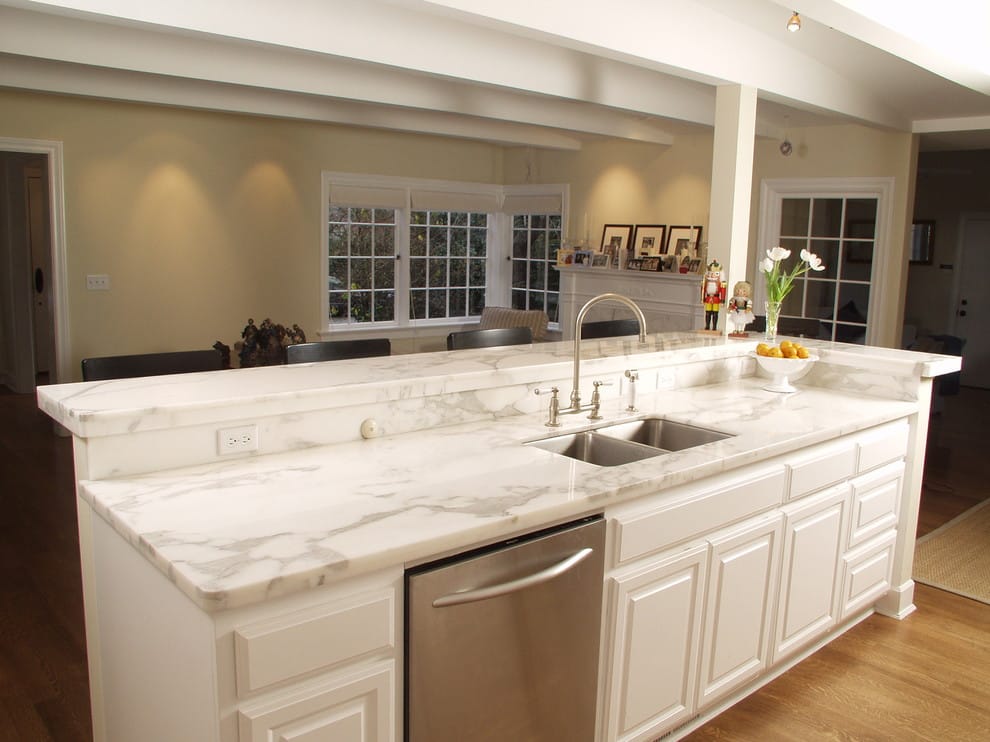
- Simple L-shaped layouts cost less than big islands with curves and multiple seams.
- Extra cutouts (for sinks, cooktops, soap dispensers) add to the total.
- Difficult site access or structural supports can raise installation costs.
4. Where to buy granite countertops
Your sourcing strategy matters:
- Local fabricators & showrooms – custom work and guidance
- Wholesale granite suppliers – best selection and visibility of full slabs
- Big-box retailers – streamlined pricing with bundled affordable granite countertop options
Shopping around across these sources can swing your project one way or the other in the granite vs quartz countertops cost debate.
Maintenance & Lifetime Value: Granite vs Quartz
Upfront price is only half the story. Maintenance and repair options affect long-term value.
Granite maintenance
To keep clean granite countertops in great shape:
- Use mild dish soap or a stone-safe cleaner for daily wiping.
- Avoid vinegar, lemon, bleach, and abrasive powders.
- Reseal regularly (usually every 1–3 years, depending on use).
Granite can also be:
- Spot-treated for removing stains from granite (e.g., oil, wine, coffee).
- Professionally or DIY repaired by repairing chips in granite.
- Restored by polishing granite surfaces if they become dull or lightly etched.
Because granite is solid natural stone, it can often be refinished instead of replaced, which increases its long-term cost-effectiveness.
Quartz maintenance
Quartz is the low-maintenance champion:
- Non-porous, so it never needs sealing.
- Highly resistant to food and drink stains.
- Cleaned easily with mild soap and water.
The trade-off?
- Quartz resins can be damaged by direct high heat, so hot pans must go on trivets or boards.
- Deep burns or severe damage can be harder to repair invisibly than with natural stone.
If you want to weigh performance vs price more deeply, these are helpful reads:
Style and Design: Where Granite Can Outshine Quartz
Even when quartz and granite are similar in price, design often tips the scales.
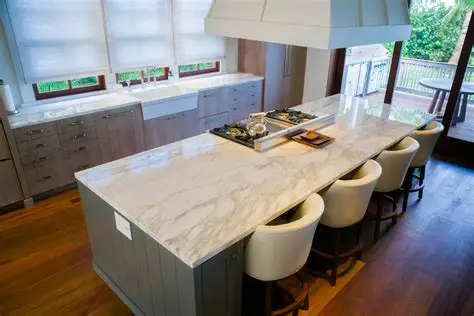
White granite countertop vs black granite countertops
Granite offers:
- White granite countertop options that brighten small spaces and pair beautifully with light or mid-tone cabinets.
- Black granite countertops that bring dramatic contrast and a luxurious, modern feel.
Granite’s natural variation means you get a unique, one-of-a-kind surface—with mineral flecks and veining that quartz tries (but doesn’t always fully manage) to mimic.
Granite backsplash designs and cabinet pairing
You can get creative with:
- Full-height granite backsplash designs for a seamless, upscale look.
- 4″ splashes plus tile to balance cost and style.
- Careful pairing granite with cabinet colors, aligning warm stones with warm woods, or using bold contrasts like black granite with white shaker cabinets.
Quartz can absolutely be beautiful—especially for minimalist, uniform designs—but granite’s natural depth and character can make it feel like you’re getting more “visual value” for the same money.
Granite vs Marble, Soapstone & Concrete: Cost and Durability
If you’re already comparing surfaces, it helps to check how granite stacks up against other popular materials.
Granite vs marble: pros and cons
- Marble
- Softer and more porous
- Etches easily from acids (wine, vinegar, citrus)
- Often more expensive for high-quality, dramatic slabs
- Granite
- Harder and more scratch-resistant
- Less reactive and more forgiving in busy kitchens
- Can be cheaper and easier to maintain
Granite vs soapstone durability
- Soapstone
- Non-porous and very stain-resistant
- Softer, so it scratches and dents more easily
- Often oiled regularly to deepen color
- Granite
- More scratch-resistant
- Holds a polished finish better in high-traffic areas
Granite better than concrete countertops
- Concrete
- Very porous and prone to hairline cracks
- Requires diligent sealing and expert installation
- Granite
- Naturally dense, strong, and crack-resistant
- Simpler care and often similar or lower cost once fabrication is factored in
In many kitchens, this makes granite better than concrete countertops in both practicality and long-term cost.
Aardwolf Granite: Balancing Cost, Quality & Design
If you’re leaning towards granite—either for cost, aesthetics, or both—the Aardwolf granite ecosystem can help you dial in quality and budget.
Aardwolf granite countertop collection
The Aardwolf granite countertop collection includes:
- Curated Aardwolf premium granite slabs chosen for strength, consistency, and beauty.
- A wide palette of the best Aardwolf granite colors, from classic neutrals to bolder, high-contrast stones.
Aardwolf granite installation services & pricing guide
With Aardwolf granite installation services, you get:
- Professional templating and careful measurement.
- Expert cutting, edging, and seam placement.
- Proper support and initial sealing for long-term performance.
The Aardwolf granite pricing guide helps you:
- Understand where each stone sits on the price spectrum.
- Compare granite options against quartz in a clear, project-specific way.
- Choose slabs that align with both design goals and budget.
This transparency makes it much easier to answer your real question: “Which is cheaper and better value—for my actual kitchen?”
Final Verdict: Which Is Cheaper, Quartz or Granite?
There’s no single, universal answer, but here’s the practical summary:
- For many standard projects, granite is often the cheaper or equal-cost choice compared to mid-range quartz, especially if you choose common colors.
- Exotic granite with rare colors and dramatic veining can be more expensive than many quartz options.
- Long-term value depends not only on the slab price, but also on:
- How you cook (heat, spills, knives)
- How much maintenance you’re willing to do
- Whether you prefer natural granite stone or engineered quartz looks
If you want low upfront cost with real stone character, granite is very hard to beat.
If you’d pay a little more for zero sealing and uniform patterns, quartz might win for you—but it’s worth checking real quotes, not just assumptions.
For more nuance and numbers, be sure to explore: