
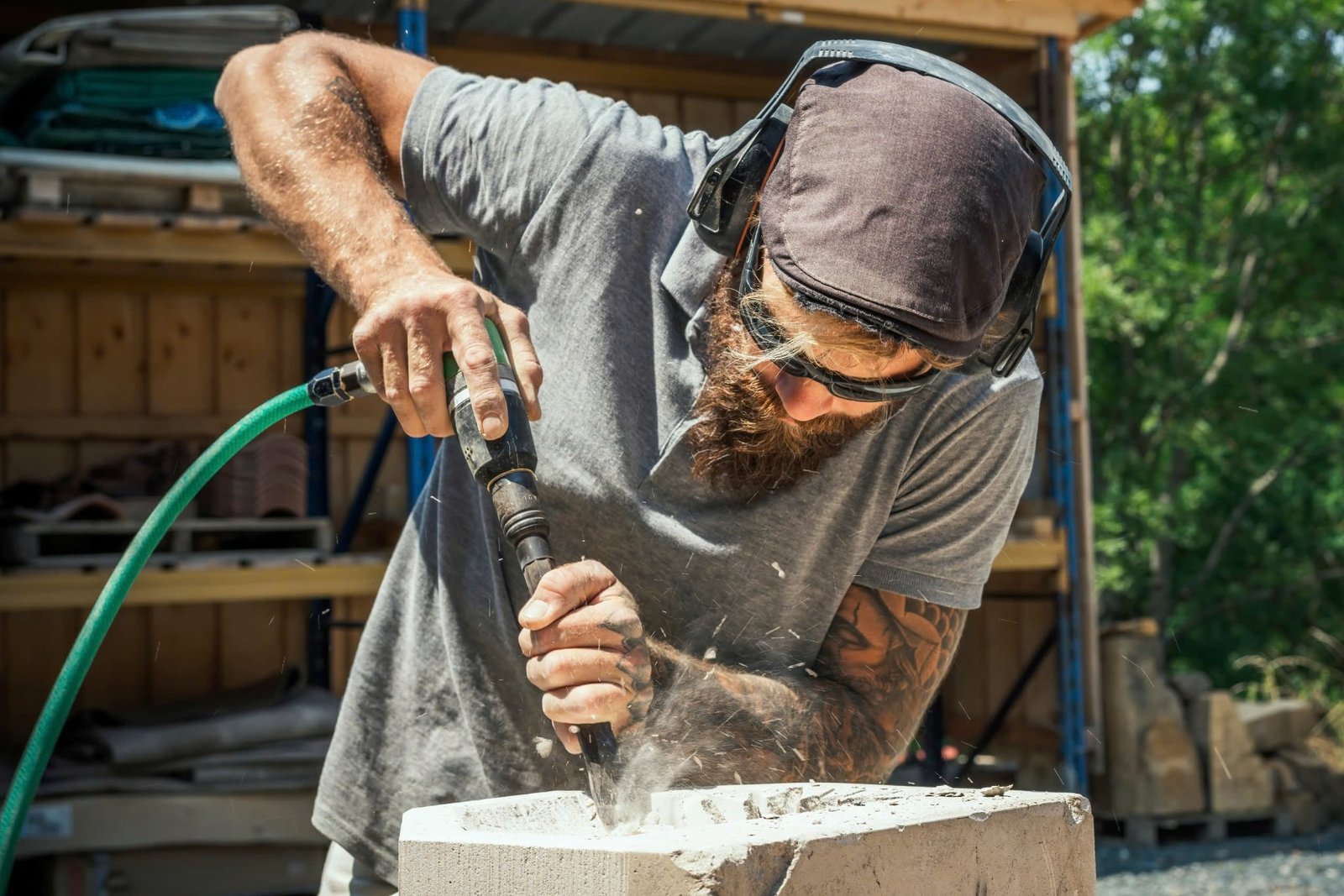
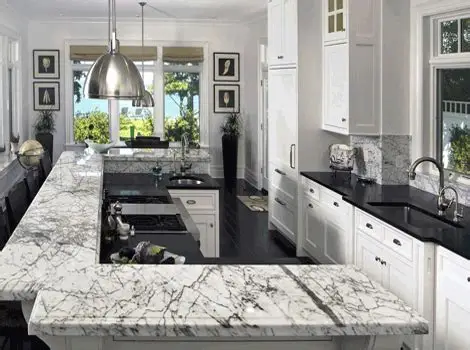
shale is fantastic in geology diagrams, but not a serious countertop material. The real decision for your home is between quartz and granite stone.
When you start planning a new kitchen or bathroom, one big question always pops up:
Which is better, quartz or granite?
Then, somewhere in the research, you might see the word shale and wonder if it belongs in the conversation at all. Short answer: shale is fantastic in geology diagrams, but not a serious countertop material. The real decision for your home is between quartz and granite stone.
This guide walks through that decision in a search-friendly way, with granite as a key focus. We’ll cover:
- What granite is and how it differs from quartz and shale
- Cost, durability, and maintenance: granite vs quartz countertops
- Design choices: white and black granite countertops, backsplashes, cabinet pairings
- Long-term value compared with marble, soapstone, and concrete
- How Aardwolf granite products fit into the bigger picture
For deeper reading on related questions, you can also check:
- Is quartz better than granite?
- Is quartz more expensive than granite?
- Is quartz or granite more expensive?
- Is quartz or granite better?

Geology, Composition, and Characteristics
Before deciding which is better, you need to understand what granite actually is.
Granite geology and composition
Granite is a natural igneous rock, formed when molten magma cools slowly deep under the Earth’s surface. That slow cooling allows large, visible crystals to grow.
Typical granite geology and composition:
- Quartz – very hard and scratch-resistant
- Feldspar – the main body color (white, cream, grey, pink)
- Mica & accessory minerals – dark flecks, subtle veining, and sparkle
These ingredients give the key characteristics of granite:
- Very high hardness and durability
- Excellent heat resistance
- Slight natural porosity (so sealing granite is important)
- Ability to take a high, glossy polish that can be renewed over time
Where shale fits in (and why it’s not a countertop star)
Shale is a sedimentary rock made of compacted mud and clay:
- It splits into thin layers
- It weathers and crumbles relatively easily
- It lacks the strength and thickness you need in a countertop
So, while shale is interesting in discussions about rock layers and weathering, it simply doesn’t belong next to granite or quartz in a real-world kitchen.
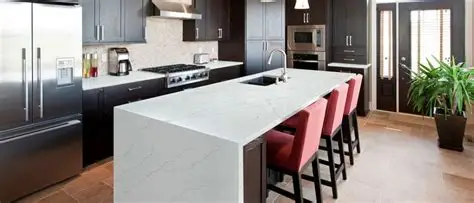
Quartz vs Granite Countertops: Natural vs Engineered
Now let’s compare the two materials you are choosing between.
What is granite (in countertop form)?
- Quarried in huge blocks from the earth
- Cut into slabs and polished
- Installed as natural stone countertops in kitchens and bathrooms
Because granite is solid stone all the way through, you can:
- Keep clean granite countertops with gentle daily care
- Repair small chips
- Re-polish dull areas
- Reseal to maintain stain resistance
What is quartz (engineered stone)?
“Quartz countertops” are engineered, not quarried slabs:
- Around 90–95% ground stone (often quartz)
- Mixed with resins and pigments
- Cast into consistent slabs and factory-finished
Key traits of quartz:
- Non-porous – no sealing needed
- Very consistent color and pattern
- Highly stain-resistant
- Less tolerant of direct high heat than granite
So when you compare natural vs engineered granite, you’re really comparing:
- The character and repairability of natural stone
- With the uniformity and low-maintenance appeal of an engineered surface
Cost Comparison: Which Is Cheaper, Quartz or Granite?
One of the biggest questions hidden inside “which is better” is: which fits the budget?
Granite countertop cost
Granite countertop cost varies based on:
- Color rarity and quarry location
- Pattern and “movement” (simple speckles vs bold, dramatic veining)
- Slab thickness and finish (polished, honed, leathered)
- Edge profile (simple eased edges vs decorative shapes)
- Number of seams and cutouts (sinks, cooktops, faucets)
You’ll find a range of choices at:
- Local showrooms and fabricators
- Big-box stores with affordable granite countertop options
- Wholesale granite suppliers, where you can pick your exact slab
Common, neutral stones often cost less. Rare, exotic stones sit at the higher end.
Quartz cost
Quartz pricing is driven mostly by:
- Brand
- Pattern complexity (especially realistic marble-look designs)
- Thickness and profile
In many markets:
- Entry- to mid-range granite is often similar in price, or sometimes cheaper, than comparable quartz.
- High-end quartz and exotic granite can swap places as the “premium” option.
If cost is your main concern, these dedicated comparisons are helpful:
Cost takeaway: there is no universal winner. For many projects, granite offers a very competitive path into real stone.
Maintenance: Clean Granite Countertops vs Zero-Seal Quartz
Maintenance is where quartz often tries to claim the “better” title—but granite is not as high-maintenance as many people think.
Caring for granite
To keep clean granite countertops in good shape:
- Wipe daily with mild dish soap or a stone-safe cleaner
- Avoid vinegar, lemon, bleach, and abrasive powders
- Reseal every 1–3 years, depending on use and sealer quality
Granite’s slightly porous nature means you sometimes deal with:
- Removing stains from granite (oil, wine, coffee, etc.) with poultices or targeted products
- Repairing chips in granite along edges with clear or color-matched epoxy
- Occasional polishing granite surfaces or hiring a pro to hone and polish if the finish dulls over time
Because granite is solid stone, it can usually be refinished instead of replaced.
Caring for quartz
Quartz is all about simplicity:
- No sealing required
- Very resistant to everyday stains
- Easy cleaning with mild soap and water
You still need to:
- Use trivets for very hot pots and pans (resins can scorch or discolor)
- Avoid harsh chemicals that could attack the resin binder
Maintenance verdict:
- If you never want to think about sealing, quartz is “better” for you.
- If you don’t mind basic care and like the option to refinish, granite remains extremely practical and repairable.
For more angle-by-angle analysis, see:
Is quartz better than granite?
Durability & Performance: Granite vs Quartz (Plus Marble, Soapstone & Concrete)
Granite vs quartz durability
Both are durable, but in different ways:
- Granite
- Extremely hard and scratch-resistant
- Excellent heat resistance
- Performs brilliantly in heavy-use kitchens
- Quartz
- Also very hard and scratch-resistant
- Superior resistance to certain stains
- Less tolerant of direct, intense heat
Granite vs marble: pros and cons
- Marble
- Softer and more porous
- Easily etched by acids like wine, vinegar, and citrus
- Amazing for baking and visual impact, but high-maintenance
- Granite
- Better for everyday cooking and busy households
- Less reactive and more forgiving
Granite vs soapstone durability
- Soapstone
- Non-porous and highly stain-resistant
- Soft; scratches and dents more easily
- Often oiled regularly to keep the color rich
- Granite
- More scratch-resistant
- Holds a polished finish longer with normal care
Granite better than concrete countertops?
- Concrete
- Very porous and prone to hairline cracking
- Dependent on sealers and reinforcement
- Granite
- Naturally dense and strong
- Easier to live with and maintain over the long term
In almost any natural stone countertop comparison, granite lands in the sweet spot between beauty, durability, and practicality.
Style & Design: White Granite Countertop, Black Granite Countertops and Beyond
Even when performance is similar, aesthetics often decide which is “better” for you.
Granite: natural variation and depth
Granite offers:
- A white granite countertop look that can brighten and visually expand a space
- Black granite countertops that give sleek, dramatic contrast in modern kitchens
- An enormous range of mid-tones with browns, greys, blues, and greens
Because each slab is unique, granite gives you a one-of-a-kind surface you won’t see in other homes.
You can also get creative with:
- Granite backsplash designs – 4″ splashes, full-height slabs, or mixed tile and stone
- Pairing granite with cabinet colors – choosing stones whose undertones complement or strikingly contrast your cabinetry and flooring
Quartz: clean, controlled, consistent
Quartz shines when you want:
- Perfectly consistent veining and color across multiple counters
- Ultra-white or specific designer tones that are hard to find in nature
- A crisp, modern look where repetition is an intentional design element
If you want your countertop to match the showroom sample exactly, quartz is hard to beat.
Aardwolf Granite: Premium Granite Stone, Clear Pricing
If this comparison is nudging you toward granite—or at least toward taking a serious look at it—the Aardwolf ecosystem can make things easier.
Aardwolf granite countertop collection
The Aardwolf granite countertop collection features:
- Carefully selected Aardwolf premium granite slabs with strong structure and attractive patterning
- A wide palette of the best Aardwolf granite colors, designed to pair with modern and classic cabinets, flooring, and backsplash materials
Aardwolf granite installation services & pricing guide
With Aardwolf granite installation services, you get:
- Professional templating and careful measurements
- Expert cutting, edging, and seam placement
- Correct initial sealing to protect your investment
The Aardwolf granite pricing guide helps you:
- Understand cost tiers (entry-level, mid-range, premium)
- Compare granite quotes against quartz in a clear, apples-to-apples way
- Choose stones that align with both your design vision and your budget
Final Answer: Which Is Better, Quartz or Granite?
There’s no universal winner—but there is a best choice for you.
Quartz may be better if you:
- Want a non-porous, zero-sealing surface
- Prefer consistent color and pattern
- Rarely set extremely hot pots directly on the countertop
Granite may be better if you:
- Love the depth, variation, and story of natural stone
- Want excellent heat resistance and long-term durability
- Don’t mind simple maintenance like sealing and occasional polishing
- Appreciate that you can repair, refinish, and restore stone instead of replacing it
If you’re still weighing pros and cons, these related guides dig deeper into specific angles: