
The real comparison is quartz vs granite countertops—two premium surfaces that look similar at first glance but behave, and are
When you’re planning a new kitchen or bathroom, one of the first budget questions is:
What’s cheaper, quartz or granite?
You might even see other rock names like shale while you’re researching and wonder if they belong in the conversation. Quick spoiler: shale is far too soft and flaky for countertops. The real comparison is quartz vs granite countertops—two premium surfaces that look similar at first glance but behave, and are priced, a bit differently.
This guide breaks down:
- How granite stone forms and why that matters for price
- Typical cost patterns for quartz vs granite
- What drives granite countertop cost up or down
- Long-term costs: cleaning, sealing, polishing and repairing
- How design choices like white and black granite countertops affect value
- Where Aardwolf fits in with curated granite slabs and transparent pricing
If you want to dive even deeper into the cost and performance debate, these related resources are worth a look:
- Is quartz or granite more expensive?
- Is quartz or granite better?
- Which is better, quartz or granite?
- Which is cheaper, quartz or granite?
Granite Stone vs Shale: Why Geology Affects Cost
Granite geology and composition
Granite is a natural igneous rock formed when molten magma cools slowly deep inside the Earth. That slow cooling creates interlocking crystals of:
- Quartz – very hard and scratch-resistant
- Feldspar – controls much of the white, cream, grey, or pink background
- Mica & accessory minerals – create dark flecks, veins and sparkle
This gives the key characteristics of granite that matter for countertops:
- Very high hardness and durability
- Excellent heat resistance
- Slight natural porosity (so sealing granite is recommended)
- A surface that can be ground, polished, repaired and refinished over time
Why shale is not a countertop material
Shale is a soft, layered sedimentary rock made of compacted clay and silt. It:
- Splits into thin sheets
- Weathers and crumbles relatively easily
- Lacks the structural strength needed for a kitchen work surface
So while shale is interesting in geology and rock outcrops, it’s not a real player in the countertop world. When we talk about price, the real comparison is quartz vs granite, not shale vs granite.
Natural vs Engineered Granite: What Are You Really Paying For?
Granite countertops (purely natural stone)
Granite countertops are:
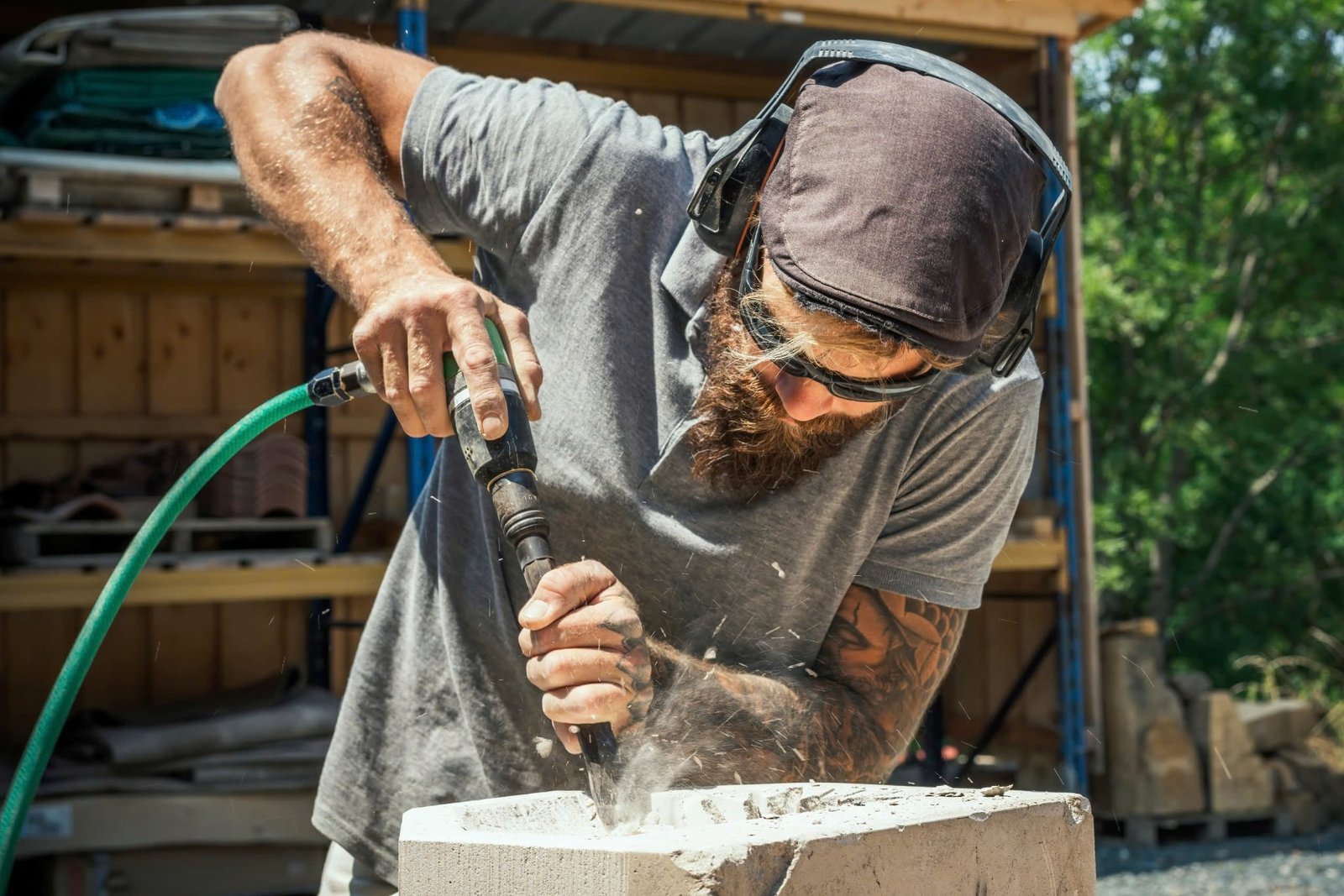
- Cut from large blocks of granite stone
- Fabricated into slabs, then polished, honed or leathered
- Completely unique—no two slabs are identical
Because granite is natural and solid all the way through, you can:
- Maintain clean granite countertops with mild soap or stone-safe cleaners
- Handle repairing chips in granite with epoxy or professional stone repair
- Refresh the finish by polishing granite surfaces or full refinishing
- Treat stains with targeted methods for removing stains from granite
Quartz countertops (engineered stone)
Quartz countertops are engineered, not quarried slabs:
- Around 90–95% ground quartz and stone
- Mixed with resins and pigments
- Cast into slabs and factory-finished
Key traits of quartz include:
- Non-porous—no sealing required
- Highly stain-resistant
- Very consistent color and pattern
- Slightly less heat tolerant than granite
So in a natural vs. engineered granite comparison you’re weighing the authenticity and refinishability of granite against the ultra-low-maintenance and uniform appearance of quartz.
What’s Cheaper, Quartz or Granite?
Here’s the honest, homeowner-friendly answer:
In many standard kitchens, mid-range granite is equal in price or slightly cheaper than mid-range quartz.
Exotic granite can cost more than many quartz options.
That’s why you’ll see different opinions online—some people got cheaper granite, others paid more for a rare stone than they would have for quartz. It all depends on the specific product and project details.
To see this from multiple angles, it’s worth reading:
What Drives Granite Countertop Cost?
1. Color, rarity and pattern
Not all granite is priced the same.
- Common, neutral patterns often become affordable granite countertop options at big-box stores and entry-level lines.
- Rare colors, dramatic veining and high “movement” are sold as premium granite slabs and can exceed the price of many quartz designs.
2. Slab thickness and edge treatment
- Standard 2–3 cm thickness is usually the most cost-effective.
- Fancy edge profiles (ogee, waterfall, mitered edges) require more labor and raise the final bill.
3. Fabrication complexity
Your granite countertop cost isn’t just material—fabrication matters too:
- Straight runs with simple edges and one sink cutout are cheaper.
- Large islands, curves, multiple cutouts and long overhangs add labor time and supports.
4. Where to buy granite countertops
Where you shop affects price and selection:
- Local fabricators and showrooms – customized service and a range of stones
- Wholesale granite suppliers – best place to hand-pick slabs from many bundles
- Big-box stores – streamlined packages with set pricing on specific colors
Comparing quotes from all three is one of the easiest ways to tilt the “what’s cheaper, quartz or granite?” equation in your favor.
Long-Term Costs: Cleaning, Sealing, Repairing & Polishing Granite
Initial price isn’t the whole story. Ongoing care affects total cost of ownership.
Sealing granite
Because granite is slightly porous, sealing granite every 1–3 years is recommended:
- Helps prevent deep stains
- Makes clean granite countertops faster to wipe down
- Is usually a quick DIY task or low-cost professional add-on
Quartz doesn’t need sealing, which is one reason some people accept a higher upfront price—lower maintenance over time can help balance the long-term costs.
Removing stains from granite
With proper sealer, stains are less likely. But if they happen, granite can often be saved with:
- Poultices and stone-safe stain removers
- Targeted cleaning routines for oil, wine, coffee, etc.
Repairing chips in granite
Edges and corners occasionally chip from heavy impacts. The good news:
- Repairing chips in granite is usually possible with clear or color-matched epoxy
- Many small repairs are nearly invisible once polishing granite surfaces is done
- Repair is almost always cheaper than replacing a slab
Refinishing and restoring granite
As stone ages, you can:
- Re-hone and re-polish dull or mildly etched areas
- Do a full natural stone countertop comparison in your own kitchen—before vs after restoration
Granite’s ability to be restored rather than replaced is a big part of its long-term value.
Design Value: White & Black Granite Countertops, Backsplashes & More
Even when quartz and granite prices are similar, design often decides which is the better buy.
White granite countertop design
A white granite countertop can:
- Brighten small or dark kitchens
- Pair beautifully with white, grey, or light wood cabinets
- Offer more visual texture than a flat, pure-white quartz in many cases
Black granite countertops
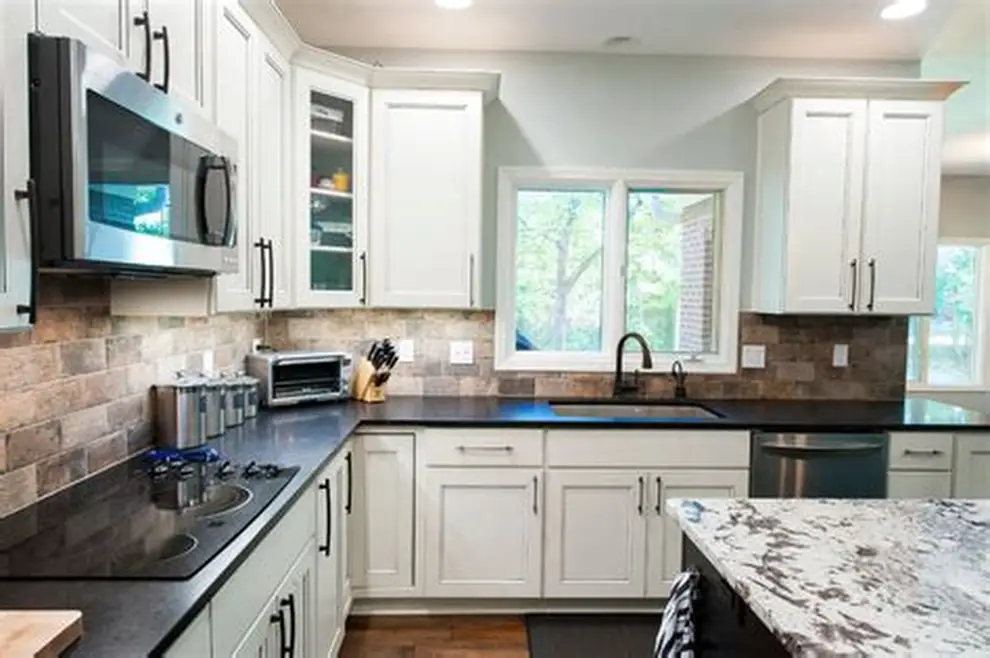
Black granite countertops deliver:
- Dramatic contrast with lighter cabinets and walls
- A sleek, high-end feel in modern kitchens
- The ability to disguise minor marks between cleanings
Granite backsplash designs & cabinet pairing
You can boost design value with:
- Full-height granite backsplash designs that showcase veining
- Mixed solutions (granite splash plus tile) to control budget
- Careful pairing granite with cabinet colors so undertones don’t clash—cool greys with cool stones, warm woods with warm-toned granites
Quartz can be gorgeous too, especially if you love perfectly consistent patterns. But if you’re paying roughly the same, granite’s natural depth and uniqueness can feel like “more stone for the money.”
Granite vs Quartz Countertops – Plus Marble, Soapstone & Concrete
Granite vs quartz countertops
From a performance standpoint:
- Granite
- 100% natural stone
- Excellent heat resistance
- Needs sealing, but can be repaired and refinished
- Quartz
- Engineered stone with resins
- Non-porous and super stain-resistant
- Less tolerant of direct high heat
So even if quartz is slightly more expensive upfront, some homeowners find the maintenance savings worthwhile. Others prefer the long-term refinishability of granite.
To explore that decision more, check:
Granite vs marble: pros and cons
- Marble – softer, more porous, prone to etching from acids.
- Granite – harder, more forgiving, often cheaper and easier to live with in busy kitchens.
Granite vs soapstone durability
- Soapstone – non-porous and very stain-resistant, but scratches and dents more easily.
- Granite – better scratch resistance and long-term polish retention.
Granite better than concrete countertops
- Concrete – porous, heavy, and prone to cracking if not perfectly engineered and sealed.
- Granite – naturally dense, strong, and simpler to maintain over time.
In many remodeling projects, this makes granite better than concrete countertops in both cost and practicality.
Aardwolf Granite: Balancing Price, Quality & Style
If you’re leaning toward granite—because it’s cheaper in your market, or simply because you prefer natural stone—Aardwolf can make the process clearer and more predictable.
Aardwolf granite countertop collection
The Aardwolf granite countertop collection offers:
- Carefully selected Aardwolf premium granite slabs chosen for structure and attractive patterning
- A wide array of the best Aardwolf granite colors, from subtle neutrals to bold, veined showpieces
Aardwolf granite installation services & pricing guide
With Aardwolf granite installation services, you benefit from:
- Professional templating and accurate measurement
- Expert cutting, edging and seam placement
- Proper support and initial sealing for long-term durability
The Aardwolf granite pricing guide helps you:
- Understand how specific stones are priced
- See where granite sits compared to quartz for your exact project
- Choose materials that align with both your style and your budget
That kind of transparency makes it much easier to answer, in real numbers, what’s cheaper—quartz or granite—for your kitchen?
Final Take: What’s Cheaper, Quartz or Granite?
There’s no single universal winner, but you can think about it like this:
- Basic to mid-range granite is often the same price or cheaper than comparable quartz.
- High-end, exotic granite can be more expensive than many quartz options.
- Total value depends on:
- How much maintenance you’re willing to do
- Whether you like natural variation or engineered consistency
- How important refinishability and heat resistance are in your kitchen
If budget is tight and you want real stone, granite is frequently the more economical choice. If you value non-porous, no-seal simplicity and perfectly consistent patterns, you may justify paying a bit more for quartz.
Either way, getting quotes for both—and using resources like: