
Spoiler: shale is great for geology tests and road cuts, but terrible as a countertop material. The real decision is between quartz countertops and granite stone.
When you’re planning a kitchen or bathroom remodel, one of the first big decisions is simple to ask and hard to answer:
Is quartz or granite better?
Then somewhere in your research you see the word shale and start wondering if that even belongs in the countertop conversation. Spoiler: shale is great for geology tests and road cuts, but terrible as a countertop material. The real decision is between quartz countertops and granite stone.
In this guide, we’ll walk through:
- What granite is (and how it differs from shale and quartz)
- How granite vs quartz countertops compare on cost, durability, and maintenance
- Design and style choices like white and black granite countertops
- Where to find affordable granite countertop options
- How Aardwolf granite products fit into your decision
We’ll also point you to deeper reading on:
- Is quartz cheaper than granite?
- Is quartz better than granite?
- Is quartz more expensive than granite?
- Is quartz or granite more expensive?
Granite Stone vs Quartz vs Shale: What Are You Really Comparing?
Granite geology and composition
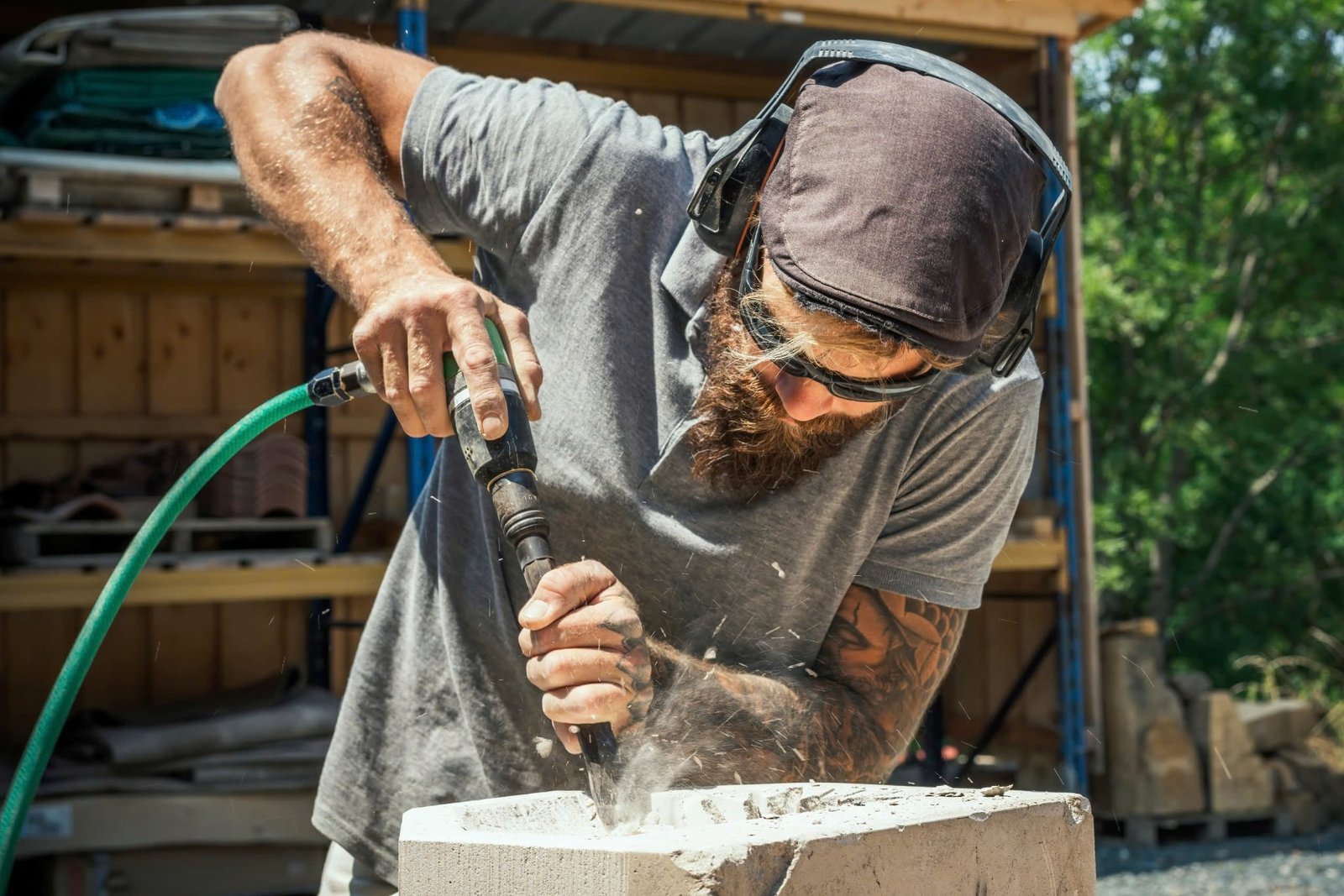
Granite is a natural igneous rock that forms when magma cools slowly deep underground. This slow cooling allows large crystals to grow, giving granite its distinctive speckled look. Typical granite geology and composition includes:
- Quartz – adds hardness and scratch resistance
- Feldspar – creates much of the white, cream, or pink body color
- Mica & accessory minerals – dark flecks and fine veining
These minerals create the key characteristics of granite you care about in a countertop:
- Very high hardness and durability
- Excellent heat resistance
- Slight natural porosity (so sealing granite matters)
- Ability to hold a high, glossy polish
In nature, granite can crack, exfoliate, and weather. If you enjoy the science side, you’ll see this discussed in topics like What Type of Weathering Is Illustrated by the Cracks in the Simulated Granite Outcrop? and in explanations of how granite differs from basalt and shale in oceanic crust questions such as what type of igneous rock makes up most of the ocean floor – basalt, granite, lucite, shal, shale?
Quartz countertops (engineered stone)
“Quartz countertops” are not slabs of pure quartz crystal. They’re engineered stone made from:
- ~90–95% ground natural stone (often quartz)
- Mixed with resins and pigments
- Cast into slabs and factory-polished
Key traits of quartz:
- Non-porous (no sealing needed)
- Highly stain-resistant
- Very consistent colors and patterns
- Less tolerant of direct high heat than granite
What about shale?
Shale is a sedimentary rock made of compacted mud and clay. It:
- Breaks into thin layers
- Weathers and crumbles easily
- Lacks the hardness and cohesion needed for a work surface
So in a practical countertop comparison, it’s granite vs quartz, with shale just serving as a geological contrast—never a real countertop option.
Granite vs Quartz Countertops: Which Is “Better”?
There’s no one-size-fits-all winner. The “better” material depends on what you value most: cost, maintenance, heat resistance, or natural beauty.
Let’s break it down.
1. Granite countertop cost vs quartz price
Granite countertop cost depends on:
- Rarity and color of the stone
- Pattern and “movement” (calm speckled vs dramatic veining)
- Slab thickness and finish
- Fabrication details (edges, seams, cutouts)
- Source (retail vs wholesale granite suppliers)
You can find:
- Affordable granite countertop options in common, neutral colors
- Mid-range granite with more interesting patterns
- Premium exotic granite stone at the high end
Quartz prices are influenced by:
- Brand
- Pattern (especially realistic marble-looks)
- Thickness and edge profiles
In many markets:
- Entry- to mid-range granite is often similar in cost or slightly cheaper than similarly styled quartz.
- Truly exotic granite can be more expensive than many quartz designs.
For more price-focused breakdowns, check:
- Is quartz cheaper than granite?
- Is quartz more expensive than granite?
- Is quartz or granite more expensive?
Cost takeaway: Quartz is not automatically cheaper or more expensive. For many standard kitchens, granite can be the cost-effective option—especially in widely available colors.
2. Maintenance: Clean Granite Countertops vs “No-Seal” Quartz
Granite maintenance:
- Needs sealing granite every 1–3 years with a penetrating sealer
- Clean with mild dish soap or stone-safe cleaners
- Avoid harsh acids (vinegar, lemon) and abrasive powders
When something happens, you can often:
- Use a poultice or targeted cleaner for removing stains from granite
- Handle repairing chips in granite with clear or color-matched epoxy
- Refresh shine through polishing granite surfaces or professional honing
Because granite is a solid natural stone, you can restore and refinish it rather than replace it, as covered in more detail in many “restore granite” guides.
Quartz maintenance:
- Non-porous, so no sealing is required
- Very easy daily care: mild soap + water
- Great resistance to most food and drink stains
However:
- Quartz resins can be damaged by direct high heat; hot pans need trivets or pads
- Deep burns or damage aren’t always as repairable as granite
Maintenance verdict:
- If you want absolutely minimal maintenance, quartz is technically “better.”
- If you don’t mind quick sealing and like the option to refinish, granite is still very practical.
For a broader opinion-based take, see Is quartz better than granite?.
3. Durability: Granite Stone vs Quartz (and vs Shale, Marble, Soapstone, Concrete)
Granite durability:
- Extremely hard and scratch-resistant
- Excellent heat resistance (better for serious cooks)
- Can last for decades with proper care
Quartz durability:
- Also very hard and resistant to scratches
- Better against many stains due to non-porous surface
- Less tolerant of sudden, high heat exposure
Compared to other natural materials:
- Granite vs marble: pros and cons
- Marble is softer and more prone to etching from acids.
- Granite is tougher, more forgiving, and better for high-traffic kitchens.
- Granite vs soapstone durability
- Soapstone is non-porous but soft; it scratches and dents relatively easily and is often oiled regularly.
- Granite holds a polished finish better and resists scratching more effectively.
- Granite better than concrete countertops
- Concrete is porous, heavy, and prone to hairline cracks if not perfectly executed.
- Granite is naturally strong, dense, and far easier to maintain.
And compared to shale? Granite is in a different universe of strength and stability. Shale simply isn’t in the countertop conversation.
Durability verdict:
If you cook a lot, use hot pans, and want a tough natural stone, granite often comes out ahead. For average use, both quartz and granite perform very well.
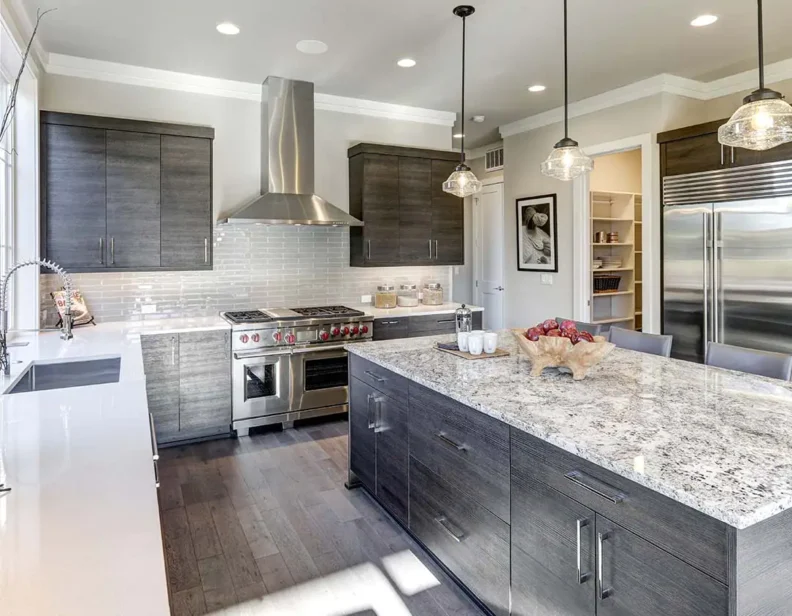
4. Appearance & Design: White Granite Countertop, Black Granite Countertops & Quartz Looks
Granite aesthetics:
- Every slab is unique; no two granite stone surfaces look exactly alike
- You can choose calm, subtle patterns or bold, dramatic veining
- Options range from warm beiges to icy whites to jet-black stones
Design possibilities with granite:
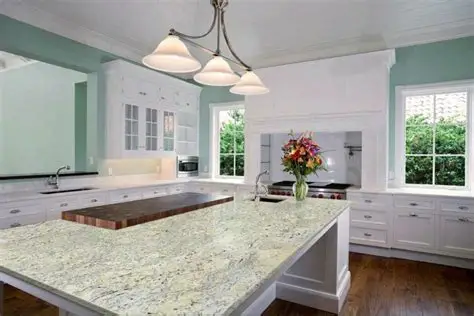
- A white granite countertop can brighten the room and pair beautifully with modern or classic cabinets.
- Black granite countertops create dramatic contrast and a high-end feel, especially with white cabinetry.
- Thoughtful granite backsplash designs (from simple 4″ splashes to full slab backsplashes) showcase the stone.
- Smart pairing granite with cabinet colors—cool granite with blues and greys, warm granite with honey or walnut woods—creates a cohesive, designer look.
Quartz aesthetics:
- Extremely consistent color and pattern
- Great when you want pure whites or precise marble-look veining
- Ideal for minimal, contemporary designs where uniformity is the goal
Appearance verdict:
- If you love natural variation, depth, and character, granite is usually “better.”
- If you prefer symmetry, predictability, and exact pattern matching, quartz has the edge.
Granite Stone in the Bigger Picture: Cost, Sourcing & Aardwolf
If this comparison is nudging you toward granite—on cost, heat resistance, or natural beauty—the next question is how to choose the right stone and supplier.
Where to buy granite countertops
Your options include:
- Local fabricators and kitchen showrooms
- Wholesale granite suppliers where you can walk slab yards and pick your exact stone
- Big-box retailers with curated affordable granite countertop options
When comparing quotes, always consider:
- Material grade and origin
- Fabrication (edges, cutouts, seam placement)
- Installation quality and warranty
Aardwolf granite: premium slabs and professional services
The Aardwolf granite countertop collection helps simplify the decision:
- Aardwolf premium granite slabs are carefully selected for strength, consistent quality, and attractive patterning.
- The range includes many of the best Aardwolf granite colors, from timeless neutrals to bold statement slabs.
With Aardwolf granite installation services, you get:
- Professional templating and layout
- Expert cutting, edging, and seam placement
- Proper structural support and initial sealing
The Aardwolf granite pricing guide makes it easier to:
- Understand cost tiers (entry-level, mid-range, premium)
- Compare granite prices directly with quartz quotes
- Balance budget, style, and performance for your specific project
So… Is Quartz or Granite Better?
The honest answer: it depends what “better” means to you.
Choose quartz if you want:
- A non-porous, no-seal surface
- Very consistent color and pattern
- Super-easy cleaning and you rarely put very hot pots on the surface
Choose granite if you want:
- A natural stone with unique character and geological history
- Excellent heat resistance and long-term durability
- The option to refinish, repair, polish, and reseal instead of replacing
- A wide range of looks, from subtle to bold, often at very competitive pricing
If you’re still undecided on price and performance, cross-check with: