
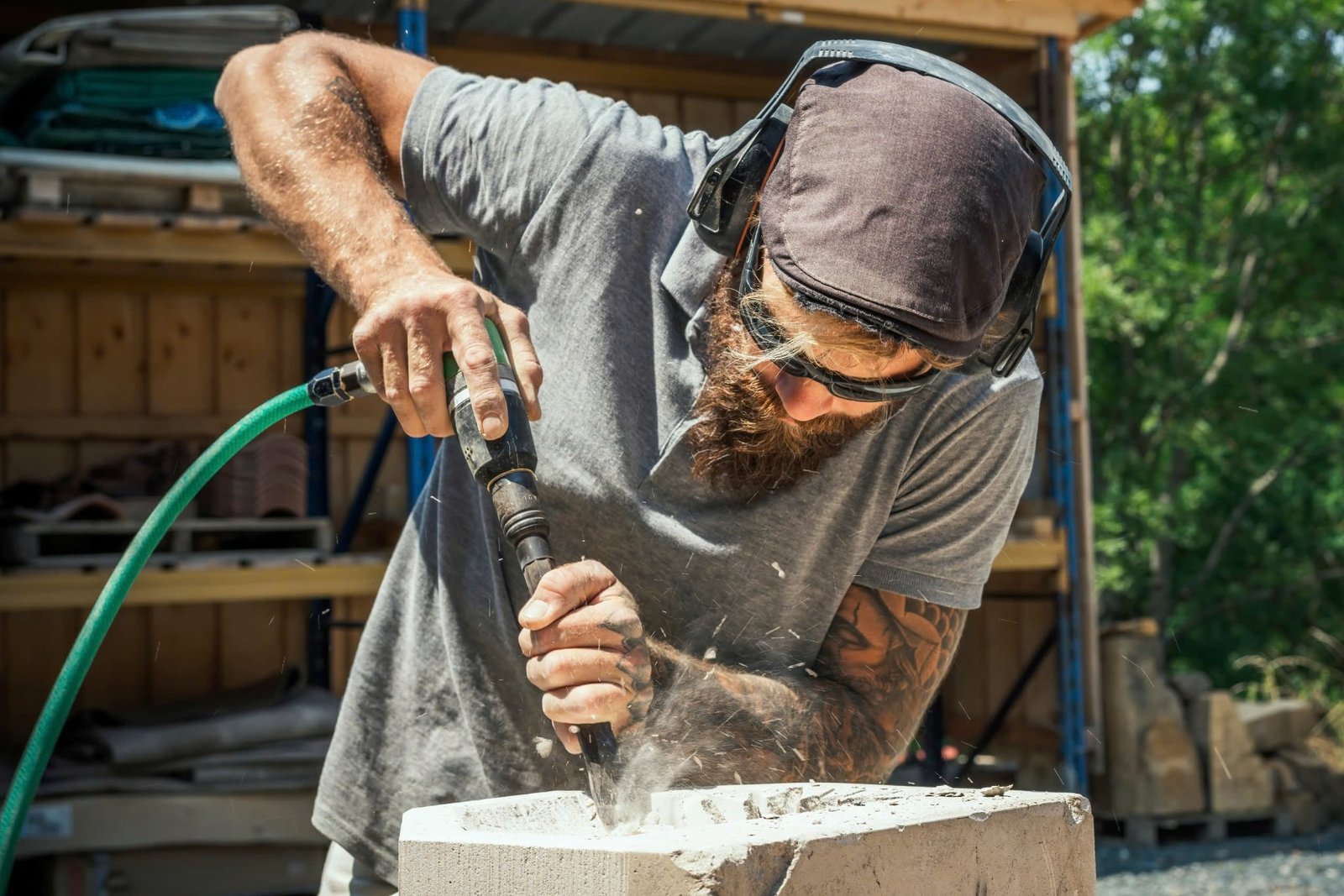
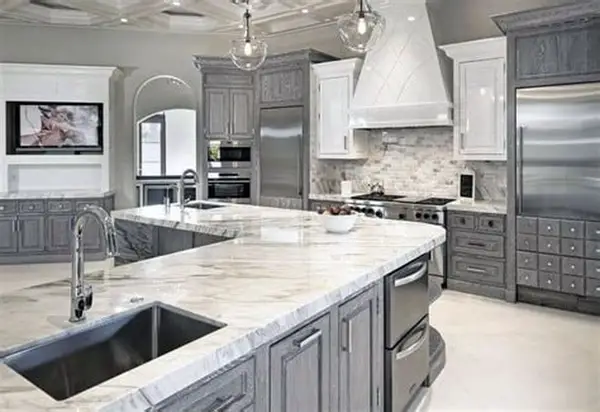
If you’re planning new granite countertops, moving an island, or budgeting for installation, one practical question comes up fast: How much does a slab of granite weigh?
If you’re planning new granite countertops, moving an island, or budgeting for installation, one practical question comes up fast:
How much does a slab of granite weigh?
Granite is gorgeous, durable, and long-lasting—but it’s also heavy. Knowing the weight of a slab helps you:
- Make sure your cabinets and floors can support it
- Plan safe transport and installation
- Estimate granite countertop cost and labor
- Decide between different thicknesses and materials (granite vs quartz, marble, concrete, etc.)
In this guide, we’ll break down:
- The typical weight of granite stone per square foot
- How slab size and thickness change the total weight
- The role of granite geology and composition (density)
- Real-world examples of common slab sizes and their weights
- How this fits into design, installation, and Aardwolf granite solutions
We’ll also point to related resources like:
for a strong semantic cluster around granite properties.
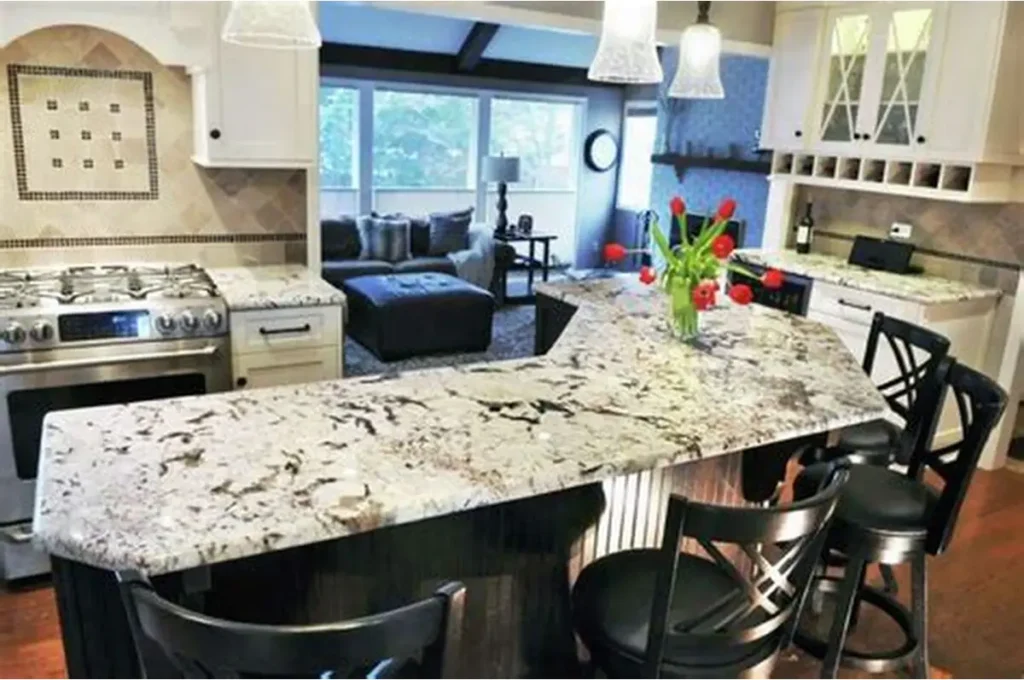
The Basics: Weight of Granite per Square Foot
To understand how much a slab of granite weighs, start with weight per square foot, which depends mainly on thickness.
Most countertop granite comes in two common thicknesses:
- 2 cm granite (about ¾”)
- 3 cm granite (about 1 3⁄16″)
Using typical density and industry norms, you can use these approximate values:
- 2 cm granite slab:
👉 11–13 pounds per square foot (lb/ft²) - 3 cm granite slab:
👉 16–18 pounds per square foot (lb/ft²)
So if you know the slab size (length × width), you can get a quick estimate of the total weight by multiplying the area by the weight per square foot.
For a deeper dive on the math and density, see:
👉 how much does granite weigh
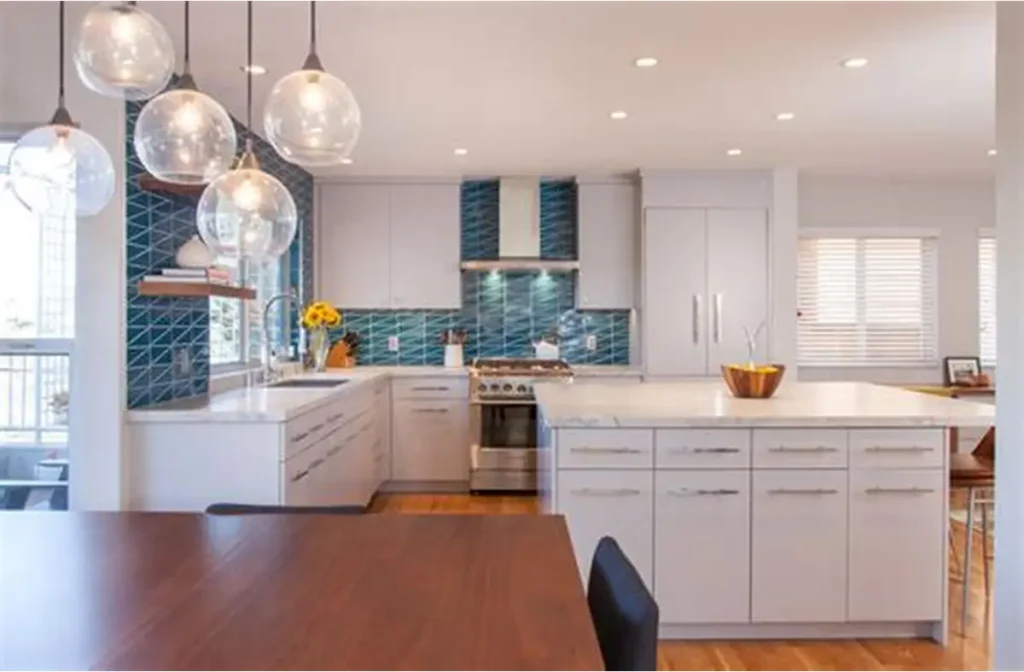
Why Granite Is So Heavy: Granite Geology and Composition
The weight of a granite stone slab isn’t random—it’s all about what granite is made of and how it forms.
What is granite made of?
Granite is a natural igneous rock formed from slowly cooled magma. It’s composed mainly of:
- Quartz – hard, glassy mineral
- Feldspar – white, cream, pink, or gray crystals
- Mica and dark minerals – black or dark brown specks that add depth
The interlocking of these minerals gives granite its key characteristics:
- High density
- Excellent strength and durability
- Resistance to scratching and heat
You can explore this more in:
👉 what is granite made of
Density of granite stone
Most natural granites have a density around:
- 2.63–2.75 g/cm³
- Roughly 165–175 lb/ft³
That high density is why a full slab can weigh hundreds of pounds, whether it’s a white granite countertop stone or darker black granite countertops.
What Is the Texture of Granite—and Does It Affect Weight?
In geology, texture of granite refers to crystal size and how the mineral grains fit together, not just how the surface feels.
Granite typically has:
- A coarse-grained (phaneritic) texture – crystals large enough to see with the naked eye
- An interlocking crystalline structure – minerals tightly packed together
This dense, crystalline texture is a big reason for granite’s weight and strength. For more on that, see:
👉 what is the texture of granite
From a weight perspective, texture doesn’t change the number dramatically—but it explains why granite is denser and heavier than many other materials.
How Big Is a Typical Slab of Granite?
The weight of a slab of granite also depends heavily on its size. While slab dimensions vary by quarry and supplier, some common ranges are:
- Smaller slabs: around 96″ × 26–28″ (often used for vanities or short runs)
- Full-size countertop slabs: around 110–120″ × 55–70″
Let’s look at some simplified examples using average dimensions and 3 cm thickness.
We’ll use 17 lb/ft² as a middle value for 3 cm granite.
Example 1: Weight of a Standard Countertop-Size Slab
Imagine a slab sized:
- 110″ × 60″ (9.17 ft × 5 ft)
- Thickness: 3 cm
Step 1 – Find area
- 9.17 ft × 5 ft = 45.85 ft²
Step 2 – Multiply by weight per square foot
- 45.85 ft² × 17 lb/ft² ≈ 780 lb
So a 3 cm granite slab roughly 110″ × 60″ can easily weigh around 750–800 pounds.
Example 2: Weight of a Larger Granite Slab
For a bigger slab:
- 120″ × 70″ (10 ft × 5.83 ft)
- Thickness: 3 cm
Step 1 – Area
- 10 ft × 5.83 ft = 58.3 ft²
Step 2 – Weight
- 58.3 ft² × 17 lb/ft² ≈ 990 lb
Many full slabs in this size can approach or exceed 900–1,000 pounds, which explains why installers use special handling gear and multiple crew members.
Example 3: Weight of a 2 cm Granite Slab
Same slab size as Example 1, but thinner:
- 110″ × 60″ (9.17 ft × 5 ft)
- Thickness: 2 cm
- Use ~12 lb/ft² as a typical value.
Step 1 – Area
- 9.17 ft × 5 ft = 45.85 ft²
Step 2 – Weight
- 45.85 ft² × 12 lb/ft² ≈ 550 lb
So a 2 cm slab of the same size might weigh around 540–560 pounds, significantly lighter than its 3 cm counterpart—something to consider for cabinet support and installation complexity.
Does Granite Color Affect Slab Weight?
You might wonder if granite rock is light in color (like many whites and creams), does that mean it weighs less than dark granite?
Generally:
- Light and dark granites have similar density, since they’re all composed of similar minerals (just in different proportions).
- A white granite countertop slab and a black granite countertops slab of the same size and thickness will usually differ only slightly in weight.
Color mainly affects appearance and design—not the basic math of how many pounds per slab. To explore why some granites are lighter in color, see:
👉 granite rock is light in color
Why Slab Weight Matters: Installation, Safety, and Design
Understanding how much a slab of granite weighs isn’t just a fun fact—it’s crucial for:
1. Cabinet and structure support
Heavy slabs put significant load on:
- Base cabinets
- Floor joists and subfloors
- Wall anchors (for partial walls or pass-throughs)
Your fabricator or installer needs to confirm that:
- Cabinets are strong enough and properly fastened
- Large overhangs are supported by brackets or corbels
- Long spans are not under-supported
This is one reason professional Aardwolf granite installation services (or similar pros) are essential, especially for big islands and thick slabs.
2. Transport and handling
A full slab weighing 700–1,000 lbs:
- Requires multiple installers or lifting equipment
- Needs careful path planning (stairs, tight corners, doorways)
- Increases labor and safety requirements, affecting granite countertop cost
3. Design decisions
Weight and thickness influence:
- Edging style (eased, beveled, mitered, laminated edges)
- Whether you choose natural vs. engineered granite or other materials
- Slab layout and the number of seams in the kitchen
Granite vs Other Materials: Weight and Durability
When you compare slab weight, you’re often also comparing durability and maintenance.
Granite vs quartz countertops
- Both are heavy, solid surfaces.
- Granite: natural, unique patterns; excellent heat resistance; needs sealing.
- Quartz: engineered; very consistent look; great stain resistance; more heat sensitive.
Granite vs marble: pros and cons
- Granite: harder, more scratch- and chip-resistant; better for busy kitchens.
- Marble: slightly lighter feel visually, but more prone to etching from acids and everyday use.
Granite vs soapstone durability
- Granite: denser and harder; resists scratching better.
- Soapstone: softer and scratches more, but naturally non-porous and often chosen for its matte, “soft” look.
Granite better than concrete countertops?
- Concrete can be similarly heavy or heavier than granite, depending on thickness.
- Concrete requires more maintenance (sealing, crack control).
- Granite offers a natural stone countertop comparison winner for many homeowners: dense, durable, and easier to live with over time.
Granite Slabs, Cost, and Aardwolf Options
Heavy slabs often mean higher handling and installation costs, which tie directly into granite countertop cost.
Factors that influence cost:
- Slab size and weight (larger / thicker = heavier)
- Rarity and patterns (exotic vs more common granite)
- Fabrication complexity (cutouts, curves, mitered edges)
- Installation difficulty (access routes, number of installers needed)
For affordable granite countertop options, you can:
- Choose standard thickness (3 cm) and common colors
- Opt for simpler edging profiles
- Work with experienced wholesale granite suppliers and fabricators
The Aardwolf granite countertop collection helps simplify these decisions:
- An Aardwolf granite pricing guide can clarify how slab size, thickness, and rarity affect cost.
- Aardwolf premium granite slabs let you choose stunning natural stone with predictable quality.
- Professional Aardwolf granite installation services ensure heavy slabs are safely transported, cut, and installed.
- You can select the best Aardwolf granite colors to coordinate with cabinets, flooring, and granite backsplash designs.
Whether you want a bold, dark island or a light, airy kitchen, there’s a granite slab that fits—just be ready to support its weight.
Caring for Heavy Granite Slabs Once They’re Installed
Once your slab is in place, its weight becomes a benefit: a rock-solid, long-lasting surface. To keep it looking its best:
- Maintain clean granite countertops with pH-neutral cleaners.
- Keep up with sealing granite to resist stains and moisture.
- Use proper methods for removing stains from granite (coffee, water spots, rust, etc.).
- Address minor damage with repairing chips in granite and polishing granite surfaces when needed.
A well-maintained granite slab can easily outlast cabinets and appliances—its density and weight are part of why it’s considered a lifetime material.
Final Thoughts: So, How Much Does a Slab of Granite Weigh?
In summary:
- Granite weight per square foot is typically:
- 11–13 lb/ft² for 2 cm slabs
- 16–18 lb/ft² for 3 cm slabs
- A standard 3 cm slab around 110″ × 60″ can weigh roughly 750–800 lb.
- Larger slabs can approach or exceed 900–1,000 lb, depending on size.
Understanding how much a slab of granite weighs helps you:
- Design cabinets and supports safely
- Plan for delivery and installation
- Compare granite to other countertop materials
- Make smarter decisions when selecting slabs from collections like Aardwolf or other suppliers