

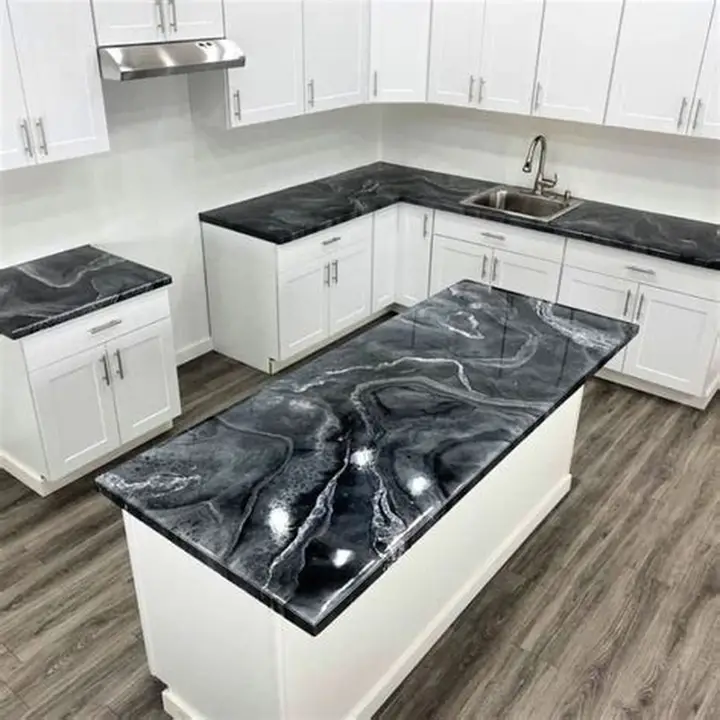
When you picture granite, you might think of pale, speckled countertops, light gray mountain faces, or creamy white granite countertops in modern kitchens.
When you picture granite, you might think of pale, speckled countertops, light gray mountain faces, or creamy white granite countertops in modern kitchens. But what actually makes granite rock light in color? Is it the way it forms, its texture, or something deeper—at the mineral level?
The short, geology-style answer is:
Granite is light in color because it is rich in light-colored, silica-rich minerals—especially quartz and feldspar.
Those felsic minerals are the key feature that directly contributes to granite’s light appearance.
In this Semantic SEO guide, we’ll unpack:
- Why many granite rocks look light in color
- The granite geology and composition behind that lightness
- How mineral content affects design choices like white granite countertops vs black granite countertops
- How this connects to countertop cost, care, and the Aardwolf granite countertop collection
We’ll also link to deeper resources on what granite is made of and how it compares to other rocks and materials.
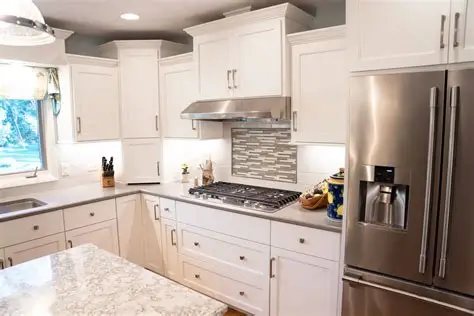
Granite Geology and Composition: Why It’s Usually Light
To understand color, we first need to understand granite stone itself.
Geologically, granite is:
- A coarse-grained intrusive igneous rock
- Formed from silica-rich (felsic) magma that cools slowly deep in the Earth’s crust
- Composed primarily of light-colored minerals like quartz and feldspar, plus smaller amounts of darker minerals
A great place to dive deeper into this is:
👉 What is granite made of?
The key feature: a felsic, light-colored mineral mix
The feature that directly contributes to granite’s light color is its high content of light-colored minerals, especially:
- Quartz – clear, white, or gray
- Feldspar (especially orthoclase and plagioclase) – white, cream, pink, or light gray
Because these minerals dominate the rock, the overall appearance of granite is:
- Light gray
- Creamy white
- Pinkish
- Pale speckled
There are darker granites, but even those usually have a strong presence of these felsic minerals.
For a mineral-focused breakdown, see:
👉 What Minerals Are in Granite?
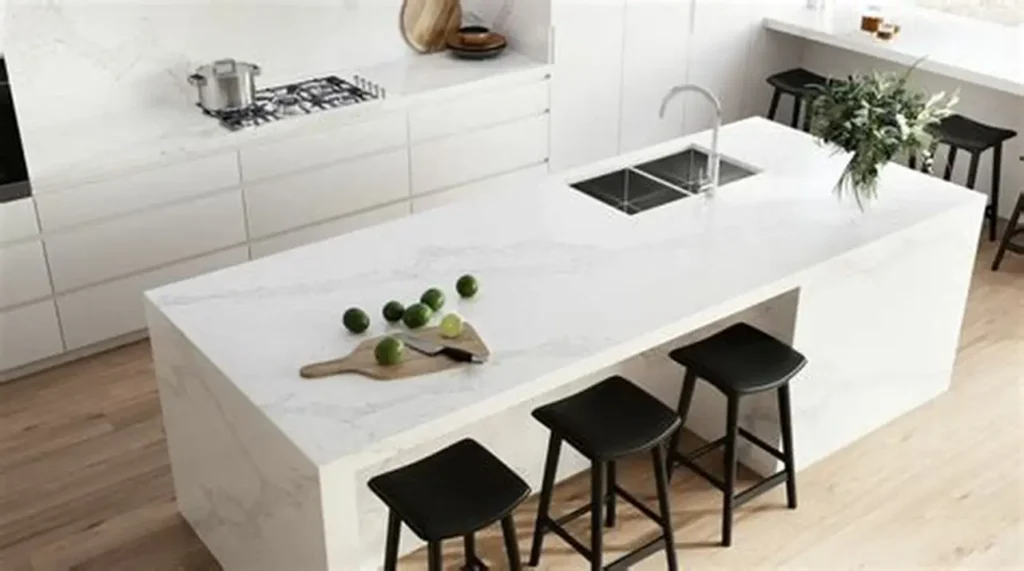
Felsic vs Mafic: Why Granite Looks So Different from Basalt
Granite’s light color becomes easier to understand when you compare it to a darker rock like basalt.
- Granite – Felsic (high in silica and light minerals like quartz & feldspar)
- Basalt – Mafic (higher in dark minerals rich in iron and magnesium)
Both are igneous rocks, but their mineral content—and therefore their color—are very different.
To explore this relationship further:
👉 What do granite and basalt have in common?
This contrast explains why:
- Granite cliffs and slabs often look pale or light gray from a distance.
- Basaltic lava flows and volcanic rocks usually appear dark gray to black.
So when we say “granite rock is light in color—what directly contributes to this color?”, the answer is clearly:
Its felsic, silica-rich mineral composition, especially the dominance of light-colored quartz and feldspar.
How Granite’s Light Minerals Affect Countertop Appearance
That same mineral mix that colors mountain-sized granite bodies also shapes the way granite countertops look in your home.
White granite countertops: quartz and light feldspar on display
A white granite countertop typically features:
- High amounts of white or off-white feldspar
- Clear to milky quartz filling in spaces
- Small amounts of dark minerals (mica, amphibole) as contrasting specks
This gives:
- Bright, reflective surfaces
- A clean, modern look
- Great pairing with dark cabinets or black hardware in granite backsplash designs
Black granite countertops: still about mineral mix
Even black granite countertops often aren’t pure black. They may:
- Be made of very dark granitic or granodioritic rocks
- Contain dark minerals like biotite and hornblende in higher proportions
- Still include lighter quartz and feldspar, but overshadowed by dark components
In reality, some countertop materials sold as “black granite” are actually darker igneous rocks (like gabbro) with lower quartz content—but in the design world, they get grouped as granite.
Granite Stone: Color, Texture, and Characteristics
Beyond just being light in color, granite’s mineral mix also creates key characteristics of granite:
- Hardness & scratch resistance – thanks to quartz
- Strength & durability – from the interlocking feldspar + quartz framework
- Heat resistance – better than many engineered surfaces
- Visible grain – coarse crystals that give that classic speckled look
These properties explain why granite works so well in both:
- Construction – as building stone, paving, monuments
- Interiors – as countertops, flooring, cladding, and more
In both contexts, the light to medium color of many granites comes directly from the high concentration of those pale felsic minerals.
Natural vs. Engineered Granite: Does Color Work the Same Way?
When people talk about natural vs. engineered granite, they usually mean:
- Natural granite stone – real rock quarry-cut into slabs
- Engineered stone (quartz) – man-made slabs from crushed stone + resin
Natural granite
- Color comes from real mineral content (quartz, feldspar, mica, etc.)
- Each slab is unique due to variations in:
- Mineral proportions
- Grain size
- Accessory minerals
Engineered quartz
- Color is controlled by pigments and aggregates mixed with resin
- More uniform and predictable, but lacks the full natural variability of true granite
In granite vs quartz countertops, the question is often:
- Do you want the organic, mineral-driven color of natural granite?
- Or the consistent, factory-controlled color of engineered quartz?
Granite’s lightness isn’t cosmetic—it’s baked into the rock as part of its felsic mineral identity.
Granite and Water: Color, Layers, and Aquifers
Granite’s mineral composition and structure not only control color but also influence how it interacts with water.
- Solid granite is dense and has low permeability.
- It’s usually not a good aquifer by itself.
- But fractured granite (with cracks and joints) can store and transmit groundwater in cracked rock aquifers.
To see how granite compares with other materials in the subsurface:
👉 Which material is an aquifer layer most likely made of?
Interestingly, the same strong, mineral-rich rock that appears pale at the surface can have a huge impact on water below ground.
From Light-Colored Rock to Clean Granite Countertops
The step from geology to design is shorter than it looks. The mineral blend that makes granite light in color also helps it shine in the kitchen.
Clean granite countertops & sealer
Because granite is slightly porous:
- Sealing granite helps protect against stains from water, coffee, oil, and wine.
- A good sealer keeps liquids from penetrating between mineral grains.
- This is especially important on lighter stones where stains are more visible.
Maintaining clean granite countertops usually means:
- Using pH-neutral cleaners (no vinegar or lemon)
- Wiping spills promptly
- Avoiding abrasive powders that can scratch or dull the polished surface
Repairing chips and polishing granite surfaces
Despite its durability, granite edges can chip or dull over time:
- Repairing chips in granite – often done with clear or color-matched epoxy
- Polishing granite surfaces – restores shine if heavy use or minor etching occur
The lighter the stone, the more visible imperfections can be—yet that same lightness also makes kitchens feel open and bright.
Granite Countertop Cost, Suppliers, and Aardwolf Options
The light color and attractive patterns of many granites also affect granite countertop cost and selection.
Cost factors
- Rarity of the specific granite variety
- Clarity and uniformity of color (some white granite types cost more)
- Origin and shipping distance
- Slab thickness and size
- Fabrication details (edges, cutouts, finishes)
For affordable granite countertop options, homeowners often:
- Choose more common color patterns
- Use standard edge profiles
- Work with trusted wholesale granite suppliers
Aardwolf granite solutions
Curated lines like the Aardwolf granite countertop collection typically provide:
- A range of light, medium, and dark granites
- Easy comparisons in an Aardwolf granite pricing guide
- Access to Aardwolf premium granite slabs with standout patterns
- Professional Aardwolf granite installation services for a precise fit
This makes it easier to find the best Aardwolf granite colors for:
- Light and airy kitchens with white granite countertops
- Bold designs with dark stone and contrasting cabinets
- Subtle, neutral palettes for timeless spaces
Natural Stone Countertop Comparison: Granite vs Others
Granite’s light color (from its mineral content) also plays into how it compares with other materials.
Granite vs marble: pros and cons
- Granite
- Harder and more resistant to scratching
- Less prone to etching from mild acids
- Often lighter overall, but can vary widely
- Marble
- Softer, more porous
- Easily etched by acids (coffee, lemon, vinegar)
- Frequently chosen for dramatic veining, not just overall lightness
Granite vs soapstone durability
- Granite – stronger and more scratch-resistant, with a crystalline light-to-medium appearance.
- Soapstone – softer, dark, and matte, but naturally non-porous and often oiled for rich color.
Granite better than concrete countertops?
- Granite – painlessly light to mid-tone colors available, fewer crack issues, simpler long-term maintenance.
- Concrete – can be tinted or stained any color but more prone to cracking and frequent sealing.
Granite’s light-colored mineral base is one of the reasons it works so well in many design schemes—especially when compared to darker or more maintenance-heavy materials.
Final Answer: Which Feature Directly Makes Granite Light in Color?
To bring it all together:
- Granite rock is light in color because it is rich in light-colored, felsic minerals, mainly quartz and feldspar.
- This felsic mineral composition is the key feature that directly contributes to granite’s pale or speckled light appearance.
- That same mineral makeup not only defines granite’s color but also its strength, durability, and performance as a countertop material.
From how it forms deep in the Earth to how it looks under your kitchen lighting, granite’s lightness is written in its minerals—and now you know exactly which feature is responsible.
For deeper reading on the science side, don’t miss:
- What do granite and basalt have in common?
- Which material is an aquifer layer most likely made of?
- What is granite made of?
- What Minerals Are in Granite?