
The real decision is quartz vs granite countertops—and the price difference isn’t always as simple as “quartz is more expensive” or “granite is cheaper.”
When you’re planning a new kitchen or bathroom, one money question shows up fast:
What’s more expensive, quartz or granite?
Search a bit longer and you might also stumble across the word shale in geology articles and wonder if it belongs in the conversation. Short answer: shale is interesting in rock layers, but nowhere near strong enough for countertops. The real decision is quartz vs granite countertops—and the price difference isn’t always as simple as “quartz is more expensive” or “granite is cheaper.”
This guide walks through:
- How granite stone forms and why that affects price
- Typical cost patterns: quartz vs granite
- What really drives granite countertop cost
- Long-term costs: sealing, polishing, repairing chips, and removing stains from granite
- Design value with white and black granite countertops
- How Aardwolf granite products fit into a smart, budget-aware choice
For deeper reading around this topic, you can also check:
- Is quartz or granite more expensive?
- Is quartz or granite better?
- Which is better, quartz or granite?
- Which is cheaper, quartz or granite?
Granite Stone vs Shale: Why Geology Matters for Your Budget
Granite geology and composition
Granite is a natural igneous rock formed when molten magma cools slowly deep under the Earth’s surface. That slow cooling allows large, interlocking crystals to grow, typically made of:
- Quartz – very hard, boosts scratch resistance
- Feldspar – controls much of the white, grey, cream, or pink background
- Mica & accessory minerals – dark flecks, streaks, and sparkle
These ingredients give the key characteristics of granite that matter for countertops:
- High durability and hardness
- Excellent heat resistance
- Slight natural porosity (hence the need for sealing granite)
- Ability to be ground, polished, and refinished over time
Why shale isn’t in the countertop conversation
Shale is a soft sedimentary rock made of compacted clay and silt. It:
- Splits into thin layers
- Crumbles and weathers easily
- Has poor structural strength compared to granite stone
So while shale is great in geology textbooks and cliff faces, it simply can’t compete with granite or quartz in a natural stone countertop comparison. When we talk about price, we’re really talking about quartz vs granite, not shale.
Natural vs Engineered Granite: Granite vs Quartz Countertops
To understand what’s more expensive, you first need to understand what you’re paying for.
What is natural granite?
Natural granite countertops are:
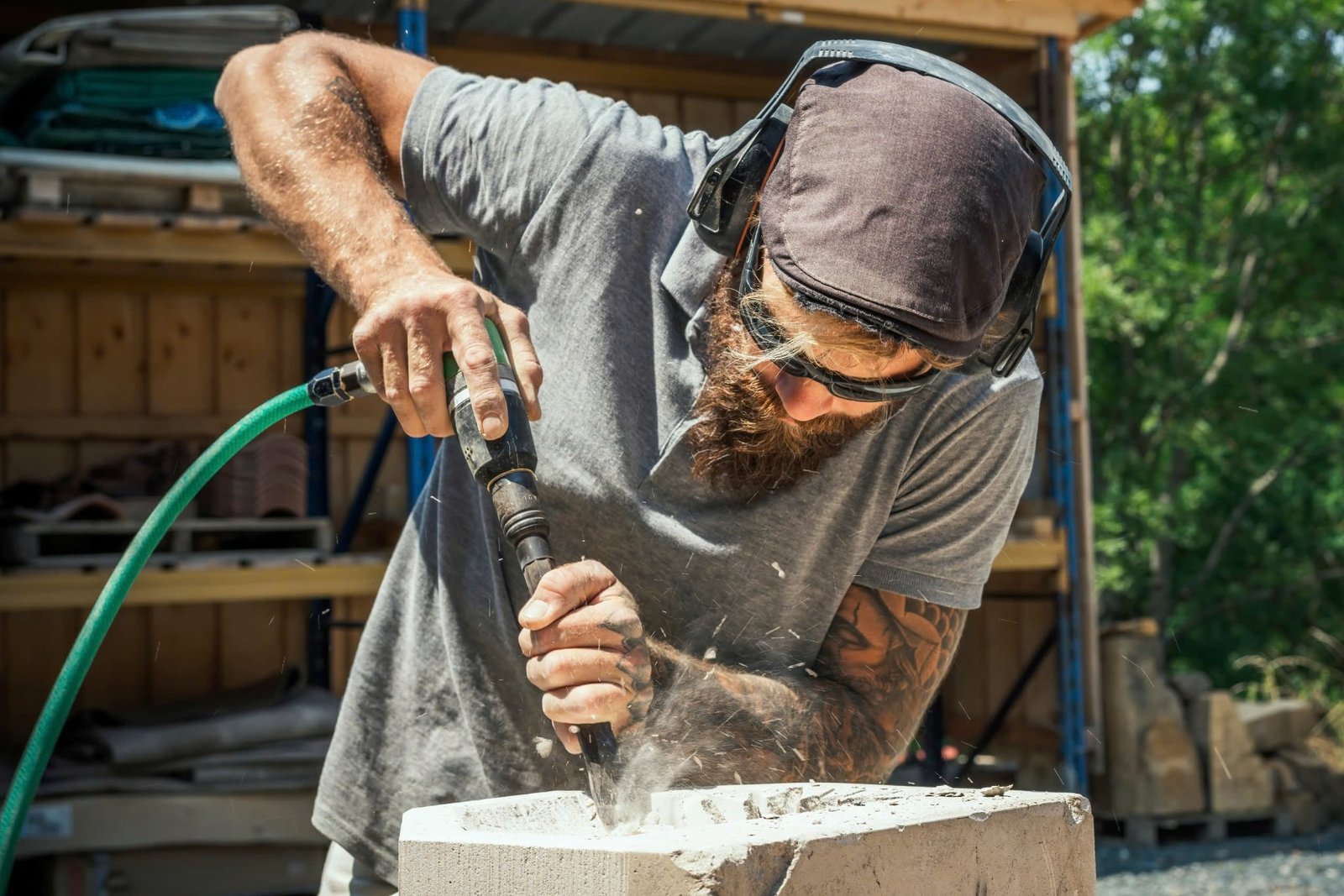
- Cut directly from blocks of granite stone in quarries
- Shaped into slabs, then polished or honed
- Completely unique—no two slabs look exactly alike
Granite can be:
- Kept beautiful as clean granite countertops with gentle daily care
- Fixed by repairing chips in granite using stone epoxies
- Revived through polishing granite surfaces and refinishing if they become dull
What is quartz (engineered)?
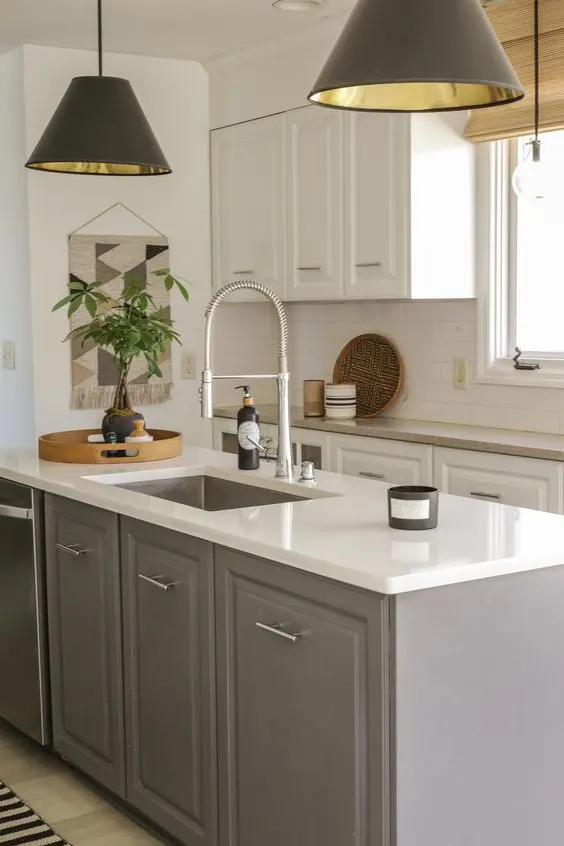
Quartz countertops are engineered stone, not slabs of raw rock:
- Roughly 90–95% ground stone (often quartz)
- Mixed with resins and pigments
- Poured into slabs, cured, and factory finished
Quartz typically offers:
- Non-porous surfaces—no sealing required
- Very consistent color and pattern
- Good stain resistance, though less heat tolerant than granite
So in a natural vs. engineered granite comparison, you’re weighing:
- The natural variation and refinishable nature of granite
- Against the predictable patterns and low maintenance of quartz
What’s More Expensive, Quartz or Granite?
Here’s the honest answer:
In many projects, quartz is slightly more expensive than mid-range granite—but high-end granite can cost more than many quartz options.
The price you pay depends on the specific material, not just the category. That’s why it’s helpful to read different angles like:
General cost patterns
- Entry- to mid-range granite
- Often priced competitively, especially common colors and patterns
- Frequently the more budget-friendly path into real stone
- Entry- to mid-range quartz
- Often similar to—or a bit higher than—mid-range granite
- Brand and pattern complexity can push price up
- High-end granite stone
- Exotic colors, dramatic veining, and rare patterns can cost more than many quartz lines
In other words, neither quartz nor granite is always “the expensive one.” The answer depends heavily on the exact slab and the fabrication work your kitchen needs.
What Drives Granite Countertop Cost?
Understanding granite countertop cost helps you see where savings are possible.
1. Color, rarity, and movement
- Common, neutral granites with subtle speckling often become affordable granite countertop options at many retailers.
- Rare colors or stones with very dramatic movement and veining are sold as premium granite slabs, with pricing that can rival or surpass high-end quartz.
2. Slab thickness and finish
- Standard thickness (2–3 cm) is generally most cost-effective.
- Specialty finishes (leathered or flamed) and ultra-thick edges can bump up the price.
3. Fabrication and installation complexity
- Straight runs with simple edges cost less.
- Complex edges, multiple cutouts, and large islands require more labor.
- Extra support for overhangs or heavy appliances also adds cost.
4. Where to buy granite countertops
Your source also affects price:
- Local fabricators and showrooms
- Big-box stores with bundled, affordable granite countertop options
- Wholesale granite suppliers where you can hand-select your slabs
Shopping multiple sources is one of the easiest ways to shift the quartz vs granite cost balance in your favor.
Long-Term Costs: Sealing, Cleaning, and Repairing Granite
Sticker price is only one part of the story. Maintenance affects your total cost of ownership.
Sealing granite
Because granite is slightly porous, sealing granite is recommended every 1–3 years:
- Sealing reduces the risk of stains
- Helps keep clean granite countertops easier to maintain
- Is usually a quick DIY task or a small add-on cost from your installer
Removing stains from granite
With proper sealing, stains are far less likely—but if they occur, they can often be handled with:
- Poultices or stone-safe stain removers
- Careful cleaning techniques tailored to oil, wine, coffee, or other common culprits
Repairing chips in granite
Edges and corners sometimes chip from impact. The good news:
- Repairing chips in granite is often possible with clear or color-matched epoxy
- Small repairs are usually much cheaper than replacing a slab
Polishing granite surfaces and refinishing
Over time, you can:
- Freshen the shine through polishing granite surfaces
- Fully restore dull or lightly etched tops by refinishing, instead of replacing
Granite’s ability to be restored keeps its lifetime value competitive—even if the initial cost is similar to quartz.
Design Value: White & Black Granite Countertops, Backsplashes & Cabinets
Even when quartz and granite are priced close together, design often tips the scales.
White granite countertop looks
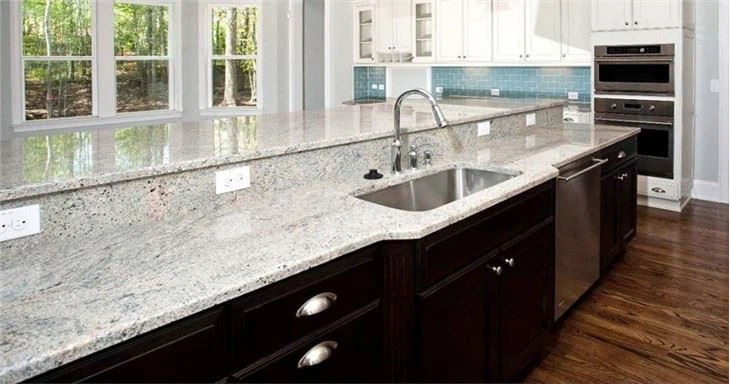
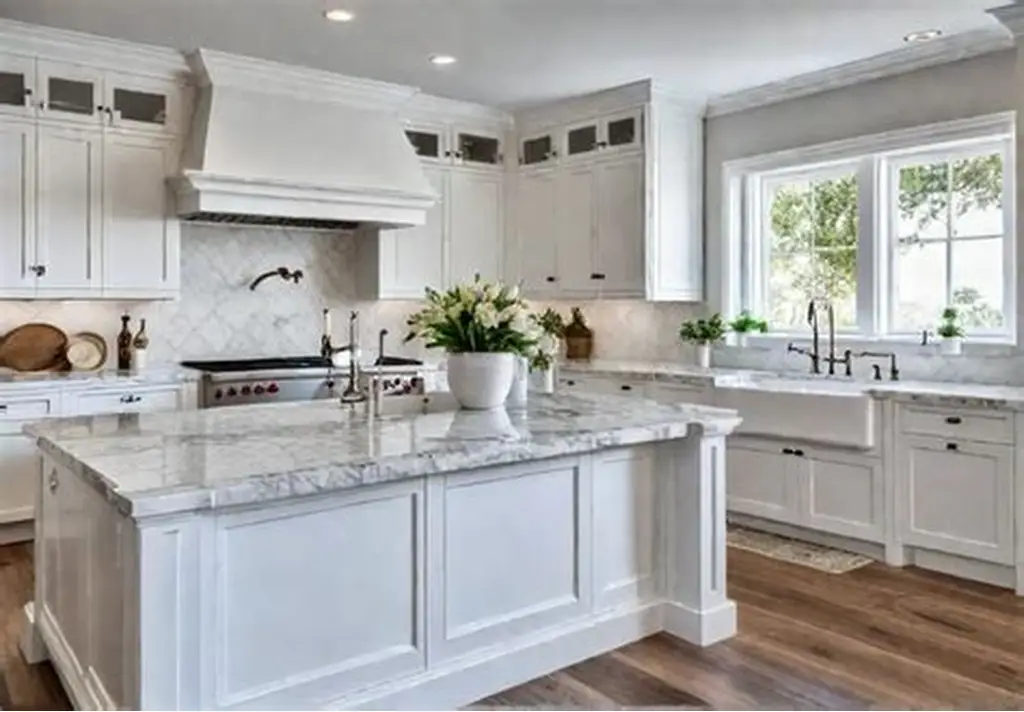
A white granite countertop can:
- Brighten small kitchens
- Pair beautifully with white, grey, or wood cabinets
- Offer subtle pattern and depth that pure white quartz sometimes lacks
Black granite countertops
Black granite countertops bring:
- Dramatic contrast with white or light cabinets
- A sleek, upscale look in modern or transitional spaces
- The ability to hide light everyday crumbs or marks between cleanings
Granite backsplash designs & cabinet pairing
You can create a cohesive look using:
- Full-height granite backsplash designs
- 4″ splashes combined with tile
- Carefully pairing granite with cabinet colors so undertones match (warm vs cool)
Quartz can certainly be beautiful too—but if you’re paying similar money, granite’s natural depth and uniqueness can feel like better “visual value” to many homeowners.
Granite vs Marble, Soapstone & Concrete: Cost and Durability
While you compare quartz vs granite, it’s worth noting how granite compares to other materials too.
Granite vs marble: pros and cons
- Marble is softer, more porous, and prone to etching from acids.
- Granite is harder, more chip- and stain-resistant, and usually easier to maintain.
Marble can be more expensive up front and in maintenance, especially in busy kitchens.
Granite vs soapstone durability
- Soapstone is non-porous and very stain-resistant, but scratches and dents more easily.
- Granite offers better scratch resistance and can hold a glossy, polished finish longer.
Granite better than concrete countertops
- Concrete is porous and prone to cracking if not perfectly engineered and maintained.
- Granite is naturally strong, dense, and easier to maintain long-term.
In many cases, granite better than concrete countertops on both cost and practicality.
Aardwolf Granite: Balancing Price, Quality & Design
If you’re leaning toward granite—either because it’s cheaper in your market, or because you prefer natural stone—Aardwolf can help you optimize both cost and quality.
Aardwolf granite countertop collection
The Aardwolf granite countertop collection includes:
- Curated Aardwolf premium granite slabs chosen for structure and appearance
- A wide palette of the best Aardwolf granite colors, from soft neutrals to bold statement stones
Aardwolf granite installation services & pricing guide
With Aardwolf granite installation services, you get:
- Professional templating and measuring
- Expert cutting, edging, and seam placement
- Proper structural support and initial sealing
The Aardwolf granite pricing guide helps you:
- Understand how different stones and layouts affect cost
- Compare granite options directly against quartz quotes
- Choose materials that respect both budget and design goals
This makes it much easier to answer, in real numbers, “what’s more expensive, quartz or granite?” for your actual kitchen.
Final Verdict: What’s More Expensive, Quartz or Granite?
There’s no one-size-fits-all answer—but we can summarize it:
- In many cases, mid-range granite is equal to or cheaper than mid-range quartz, especially for popular colors.
- High-end, exotic granite can be more expensive than many quartz options.
- Lifetime value depends on:
- How you cook (heat, spills, heavy cookware)
- How you feel about sealing and minor maintenance
- Whether you prefer natural granite stone or the consistent look of engineered quartz