
they want to know what they’re getting for their money. That means understanding granite stone,
When you start planning a new kitchen or bathroom, one question comes up very quickly:
Is quartz more expensive than granite?
Then, if you’ve been reading about geology or stone types, you might see other terms like shale and wonder how they fit into the picture.
Here’s the simple truth:
- Quartz is often a bit more expensive than mid-range granite,
- But their price ranges overlap a lot,
- And high-end granite can be more expensive than many quartz slabs.
Most homeowners don’t just want a price tag—they want to know what they’re getting for their money. That means understanding granite stone, how it forms, how it behaves in a kitchen, and how it compares to quartz, marble, soapstone and even concrete.
This guide walks through:
- How granite’s geology affects pricing and performance
- Real-world cost factors for granite vs quartz countertops
- Maintenance, durability, and refinishing potential
- Design flexibility with white and black granite countertops
- Where Aardwolf granite products fit into the decision
Along the way, you’ll see how deep-earth topics like
[What Type of Weathering Is Illustrated by the Cracks in the Simulated Granite Outcrop?]
and
what type of igneous rock makes up most of the ocean floor – basalt, granite, lucite, shal, shale?
connect to the countertops you use every day.
Granite Stone Basics: Why Geology Matters for Your Countertop Budget
Before getting into “Is quartz more expensive than granite?”, it helps to understand what granite actually is.
Granite geology and composition
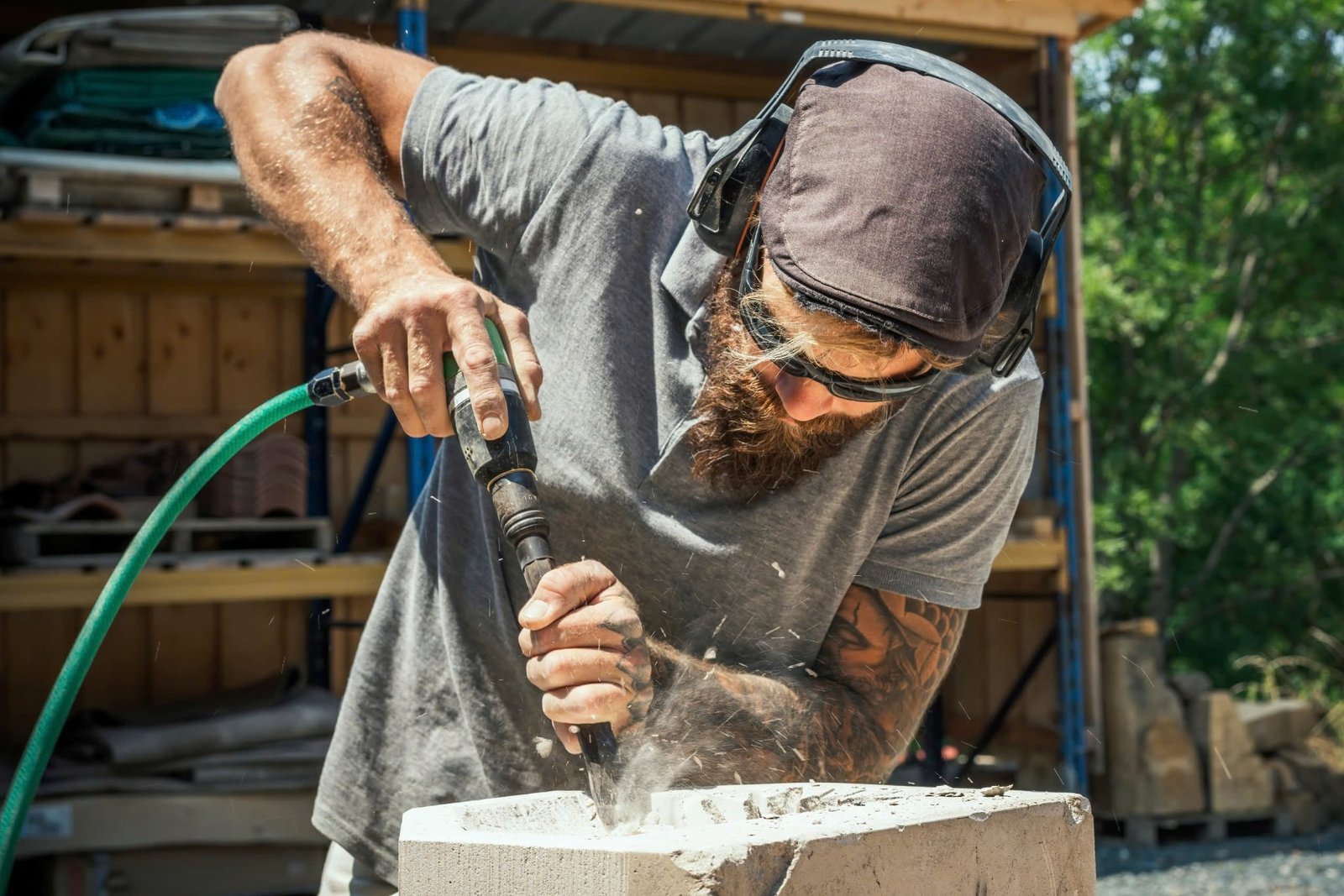
Granite is a natural igneous rock formed when molten magma cools slowly deep beneath the Earth’s crust. That slow cooling produces large, visible crystals of:
- Quartz – adds hardness and scratch resistance
- Feldspar – shapes much of the white, cream, grey, or pink background
- Mica & accessory minerals – provide dark flecks, veins, and sparkle
These minerals create the core characteristics of granite that matter in a kitchen:
- High hardness and durability
- Excellent heat resistance (better than many engineered surfaces)
- Slight natural porosity (which is why sealing granite matters)
- Ability to take and hold a high polish
Over time, natural processes can further alter granite:
- Metamorphic forces can transform it, as discussed in “what geologic process can change granite into gneiss?”
- Exfoliation and stress-relief can make a large block of granite form layers like an onion, a process often tied to the same kind of fracturing asked about in What Type of Weathering Is Illustrated by the Cracks in the Simulated Granite Outcrop?
In contrast, shale is a soft, layered sedimentary rock—great for geology exams, but far too weak for countertops.
Natural vs. Engineered Granite: Granite vs Quartz Countertops
A lot of cost confusion comes from mixing up natural granite and engineered quartz.
Natural granite countertops
- Slabs cut from real granite stone blocks
- Each slab is unique; no two are identical
- Can be cleaned, polished, repaired, and resealed many times
- Available in everything from budget-friendly neutrals to rare, exotic patterns
Quartz countertops (engineered)
- Made from ground quartz and stone particles bound with resins and pigments
- Extremely consistent in color and pattern
- Non-porous (no sealing required)
- Less tolerant of high heat than natural granite
If you want to dive deeper into the price angle from another perspective, it’s worth reading:
Those complement this guide by exploring cost and performance from slightly different angles.
Is Quartz More Expensive Than Granite? (The Honest Answer)
Let’s tackle the main question directly.
Typical price ranges
In many markets, installed prices roughly follow this pattern:
- Granite countertops
- Wide range depending on color, pattern, and origin
- Common, lightly patterned stones often fall into the more affordable range
- Exotic granite stone with dramatic movement can become premium-priced
- Quartz countertops
- Frequently start slightly higher than mid-range granite
- Designer patterns (especially marble-look quartz) can push the price up
- Less variance from “cheap” to “luxury” than granite, because production is controlled
So is quartz more expensive than granite?
Often yes at the entry- to mid-range,
but no when you’re comparing quartz to rare or exotic granite slabs.
That’s why one homeowner might say, “Quartz was more expensive than granite for us,” while another swears it was cheaper. It depends entirely on which slabs and brands you’re comparing.
What Drives Granite Countertop Cost?
Whether granite ends up cheaper or more expensive than quartz comes down to a few key factors.
1. Color, rarity, and movement in granite stone
- Common colors with subtle speckling
- Often sold as affordable granite countertop options
- Rare hues or dramatic veining
- Priced higher as premium or exotic granite stone
The more unique and visually dramatic the granite, the higher the granite countertop cost tends to climb.
2. Slab thickness and edge profiles
- Standard thickness (2–3 cm) keeps material costs reasonable
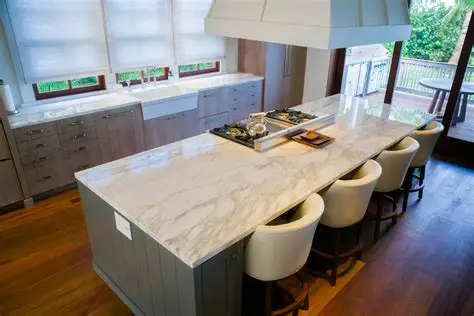
- Fancy edge profiles (ogee, waterfall, or mitered edges) add fabrication time and cost
- Extra-thick islands or built-up edges can push pricing into “luxury” territory
3. Layout complexity
- Simple, straight runs are cheaper to fabricate and install
- Large islands, many seams, curves, and multiple cutouts (sinks, cooktops) increase labor cost
- Difficult site access or structural reinforcement also factor into the final bill
4. Where to buy granite countertops
Your sourcing path matters:
- Local fabricators and showrooms – custom work, mid to high range depending on stone
- Wholesale granite suppliers – often the best selection and value if you’re willing to visit slab yards
- Big box retailers – streamlined quotes and standard affordable granite countertop options
Shopping around can easily change whether quartz or granite seems “more expensive.”
Maintenance & Lifetime Value: Granite vs Quartz Countertops
The initial price tag isn’t the whole story. Maintenance and longevity play a big part in value.
Clean granite countertops & sealing granite
Granite is slightly porous, so:
- It should be sealed with a penetrating sealer every 1–3 years, depending on use
- Daily care = mild dish soap or stone-safe cleaner plus a soft cloth
- Harsh acids, rough scouring pads, or strong bleach should be avoided
If something goes wrong:
- Removing stains from granite (oils, wine, coffee) is usually possible with proper cleaners or poultices
- Repairing chips in granite near edges is often doable using clear or color-matched epoxy
- Polishing granite surfaces can restore lost gloss after years of use or minor etching
Quartz maintenance
Quartz wins on simplicity:
- Non-porous: no sealing required
- Very resistant to common stains
- Clean with mild soap and water
However:
- The resins in quartz are sensitive to high heat—hot pans straight off the stove can cause discoloration or damage
- Severe damage is sometimes harder to repair invisibly than comparable issues in granite
If zero sealing is a priority, quartz may justify a slightly higher upfront cost. If light sealing doesn’t bother you, granite’s long-term refinishability is a big plus.
Durability & Use: Granite vs Quartz, Marble, Soapstone and Concrete
Granite vs quartz durability
- Granite
- Excellent scratch and heat resistance
- Can be refinished and repolished over time
- Quartz
- Highly scratch-resistant
- Less tolerant of direct high heat
Granite vs marble: pros and cons
- Marble – Softer, more porous, and prone to etching from acids; beautiful but high-maintenance.
- Granite – Harder, more forgiving, and typically a better everyday workhorse in family kitchens.
Granite vs soapstone durability
- Soapstone – Very stain-resistant and non-porous, but softer and more likely to scratch or dent.
- Granite – More scratch-resistant and better at holding a crisp, polished finish over time.
Granite better than concrete countertops?
- Concrete – Highly porous, can crack, and depends heavily on sealers and reinforcement.
- Granite – Naturally dense and strong; easier to maintain and often more cost-effective long term.
Across almost any natural stone countertop comparison, granite lands in the sweet spot between beauty, durability, maintenance, and cost.
Design & Style: White Granite Countertop, Black Granite Countertops & More
Even when quartz is slightly more expensive, many homeowners still choose granite for design reasons.
Visual richness of granite stone
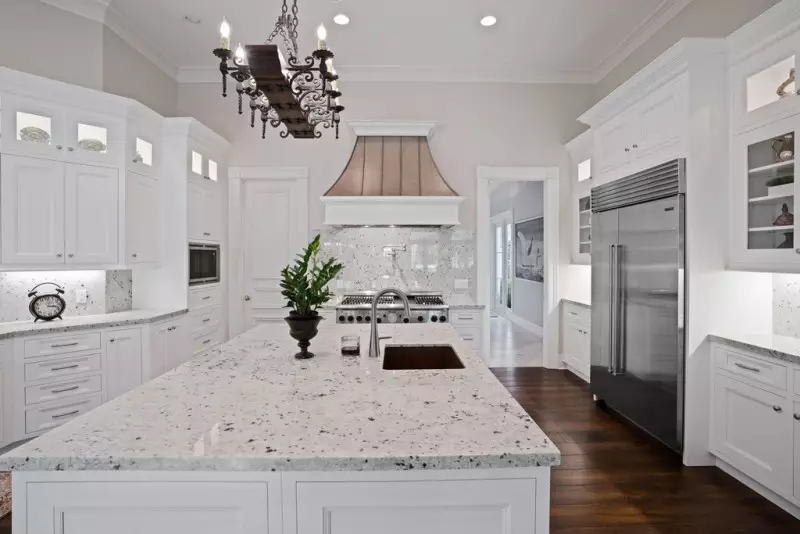
With granite, every slab is a one-off piece of natural art:
- White granite countertop designs can brighten small kitchens and pair beautifully with light or mid-tone cabinets.
- Black granite countertops bring contrast and drama, working especially well with white or pale cabinetry.
Thoughtful design also includes:
- Granite backsplash designs – from simple 4″ splashes to full-height slabs that showcase veining
- Pairing granite with cabinet colors – matching warm stones with warm woods, or striking contrasts like black granite with white shaker cabinets
Quartz certainly offers sleek modern looks, but granite’s organic patterns and depth are hard to replicate in engineered materials.
Aardwolf Granite: From Quarry to Finished Countertop
If your research leads you toward granite—either because it’s more affordable than the quartz you like or simply because you prefer natural stone—Aardwolf can help simplify the journey.
Aardwolf granite countertop collection
The Aardwolf granite countertop collection focuses on:
- Carefully curated Aardwolf premium granite slabs
- Stones selected for structural integrity and attractive, consistent patterning
- A wide range of tones and textures, including many of the best Aardwolf granite colors for today’s kitchen and bath styles
Aardwolf installation & pricing
With Aardwolf granite installation services, you benefit from:
- Professional templating and measuring
- Expert cutting, edging, and seam placement
- Proper support planning and initial sealing for long-term performance
The Aardwolf granite pricing guide helps you:
- Understand where each stone sits in the pricing spectrum
- Balance material cost against fabrication complexity
- Compare granite against quartz in a transparent, project-specific way
That way, the question “Is quartz more expensive than granite?” becomes much easier to answer for your exact kitchen, not just in theory.
Final Verdict: Is Quartz More Expensive Than Granite?
There’s no universal yes or no—but we can sum it up like this:
- Quartz is often slightly more expensive than mid-range granite, especially for popular, on-trend patterns.
- Granite can be cheaper or more expensive than quartz, depending on the rarity of the stone and the complexity of your project.
- Long-term value depends on:
- How much you cook (and how hot you run your kitchen)
- How you feel about sealing and light maintenance
- Whether you prefer the natural character of granite stone or the consistency of engineered quartz