
This guide looks at granite vs quartz countertops with a special focus on granite—what it is, what affects its price, how it compares long-term, and how to decide which surface gives you the best value for your home.
When you’re choosing new countertops, it’s totally normal to end up asking:
Is quartz cheaper than granite… and what about other rocks like shale?
Short version:
- Quartz is not always cheaper than granite.
- Their price ranges overlap a lot, and which one is cheaper depends on color, brand, availability, and fabrication costs.
- Shale? That’s a soft sedimentary rock and not a realistic countertop option.
This guide looks at granite vs quartz countertops with a special focus on granite—what it is, what affects its price, how it compares long-term, and how to decide which surface gives you the best value for your home.
Granite Stone vs Quartz: What Are You Really Buying?
Before comparing price, it helps to understand what each material actually is.
Granite stone: natural igneous rock
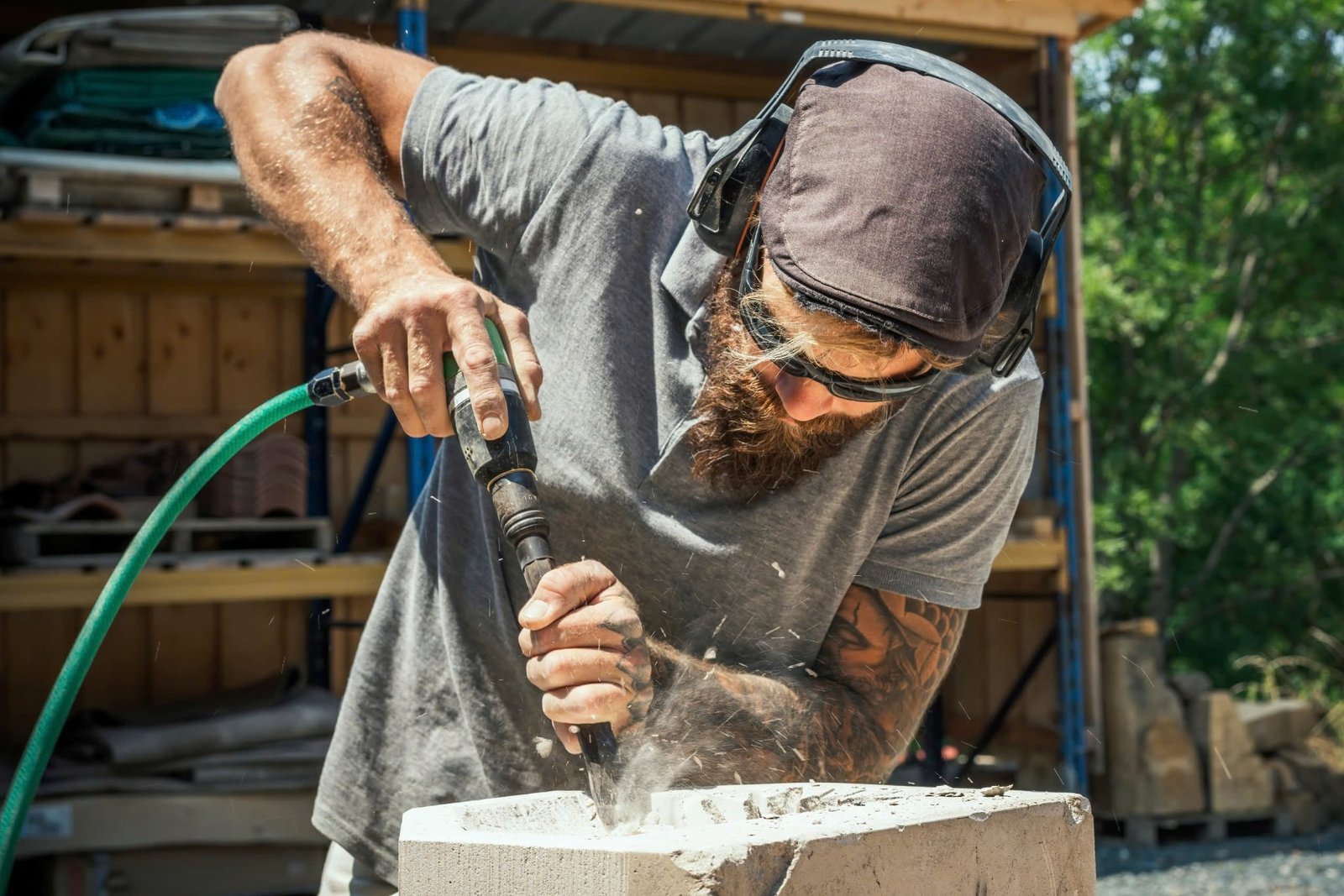
Granite stone is a natural material quarried directly from the Earth. It forms when magma cools slowly deep underground, creating a coarse, speckled texture.
Granite geology and composition typically includes:
- Quartz – extremely hard, boosts scratch resistance
- Feldspar – controls much of the base color (white, cream, pink, etc.)
- Mica & accessory minerals – give dark flecks and subtle shimmer
These minerals give granite its key characteristics:
- Very high hardness and durability
- Excellent heat resistance
- Slight natural porosity (needs sealing)
- Can be polished to a high gloss or finished honed/leathered
Granite is part of a bigger geological story, too. If you love stone science, you’ll enjoy articles like:
- What geologic process can change granite into gneiss?
- How can a large block of granite form layers like an onion?
- What Type of Weathering Is Illustrated by the Cracks in the Simulated Granite Outcrop?
- What type of igneous rock makes up most of the ocean floor – basalt, granite, lucite, shal, shale?
Quartz is different.
Quartz countertops: natural mineral + resin
“Quartz countertops” are engineered, not slabs of pure crystal:
- About 90–95% ground stone (often quartz)
- Bound with resins and pigments
- Manufactured in controlled colors and patterns
That makes quartz:
- Non-porous (no sealing needed)
- Very consistent in color and pattern
- Slightly less heat tolerant than granite
So when you compare natural vs engineered granite, you’re really comparing a one-of-a-kind natural slab vs a man-made surface designed for uniformity and low maintenance.
Is Quartz Cheaper Than Granite? (The Real Answer)
Now to the big question: which is cheaper—quartz or granite?
The honest answer is:
Neither is “always cheaper.” Their price ranges overlap.
In many markets:
- Entry-level and common-color granite can be less expensive than mid-range quartz.
- Exotic or rare granite slabs can cost more than premium quartz.
- Installation, edges, and cutouts can push either material’s total cost up or down.
Instead of expecting quartz to automatically be cheaper, it’s better to think in terms of:
- Granite countertop cost drivers
- Quartz cost drivers
- Long-term value and maintenance for each surface
What Affects Granite Countertop Cost?
Several factors influence the final price of granite in your kitchen or bath.
1. Color and rarity
- Common, widely available colors (simple patterns, neutral tones)
- Often become affordable granite countertop options
- Rare colors, dramatic veining, or high-movement patterns
- Sold as premium granite slabs, at higher price points
2. Slab thickness and size
- Standard thickness: 2 cm or 3 cm
- Extra-thick or jumbo slabs cost more in material and require more support and labor.
3. Fabrication complexity
- Straight runs with a standard eased edge are cheaper.
- Fancy edges, curves, waterfall ends, and multiple cutouts (for sinks and cooktops) add fabrication time and cost.
4. Finish and detailing
- Polished finish is usually standard.
- Honed or leathered finishes sometimes cost more.
- Integrated drainboards, miters, and special features increase labor costs.
5. Where you buy: retail vs wholesale granite suppliers
You can buy granite through:
- Local fabricators and showrooms
- Big-box stores with package deals
- Wholesale granite suppliers where you hand-select full slabs
Shopping around often reveals that the same or similar granite can be priced very differently between sellers.
What Affects Quartz Countertop Cost?
Quartz has its own cost variables:
- Brand and design – Popular designer brands and marble-look patterns cost more.
- Color complexity – Veining, sparkle, and directional patterns add price.
- Thickness & slab size – Similar to granite.
- Fabrication complexity – Edges, seams, and cutouts cost just like granite.
In practice:
- Basic quartz may be similar in price to mid-range granite.
- High-end quartz can rival or exceed exotic granite pricing.
So when you ask “is quartz cheaper than granite?”, the most accurate response is: “Sometimes yes, sometimes no. Get quotes for your exact project.”
Maintenance and Lifetime Cost: Granite vs Quartz Countertops
Sticker price isn’t the whole story—maintenance and longevity matter too.
Granite maintenance: sealing and simple care
Because granite is slightly porous, sealing granite is important:
- A penetrating sealer helps block stains and makes cleanup easy.
- Most kitchens need resealing every 1–3 years (a quick DIY task in many cases).
For clean granite countertops:
- Use mild dish soap or stone-safe cleaner.
- Avoid harsh acids (vinegar, lemon juice) and abrasive pads.
- Wipe spills promptly to minimize removing stains from granite later.
If damage occurs:
- Repairing chips in granite is often done with clear or color-matched epoxy.
- Polishing granite surfaces can restore shine if the finish becomes hazy or slightly etched.
Quartz maintenance: low effort, but watch the heat
Quartz benefits:
- Non-porous: no sealing required.
- Very stain-resistant to common household spills.
Cautions:
- Resins in quartz can be damaged by high heat—so trivets and hot pads are a must.
- Deep chips or burns can be harder to repair invisibly than on natural stone.
If you’d rather reseal once in a while than worry about hot pans, granite wins. If you want zero sealing, quartz wins.
Natural Stone Countertop Comparison: Granite vs Others
Quartz isn’t the only alternative you might be considering. How does granite compare to classic natural materials?
Granite vs marble: pros and cons
- Marble
- Softer and more porous
- Easily etched by acids (wine, vinegar, lemon juice)
- Gorgeous, but high-maintenance
- Granite
- Harder and more scratch-resistant
- Better for day-to-day, high-traffic kitchens
- Easier to keep looking polished with standard care
Granite vs soapstone durability
- Soapstone
- Very stain-resistant and non-porous
- Softer and more prone to scratches and dents
- Often needs oiling to keep a uniform appearance
- Granite
- More scratch-resistant
- Maintains a glossy finish longer without frequent oiling
Granite better than concrete countertops?
- Concrete
- Extremely porous, can stain and crack
- Requires diligent sealing and sometimes reinforcement
- Granite
- Naturally strong and dense
- Easier to maintain and typically more forgiving over time
All told, granite is one of the strongest players in any natural stone countertop comparison, even when stacked against newer or trendier options.
Design & Style: Granite Stone and Quartz in Real Kitchens
Prices being similar in many cases, much of the decision comes down to look and feel.
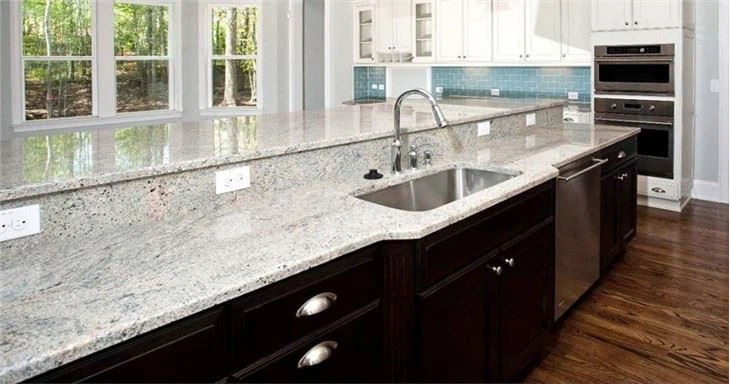
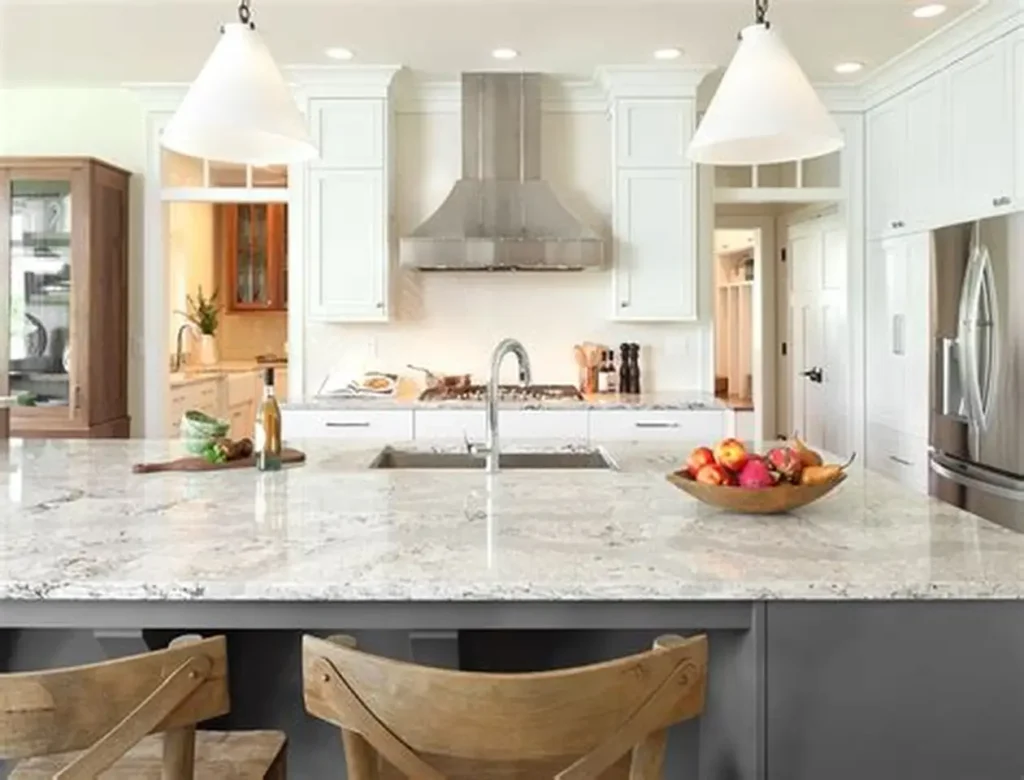
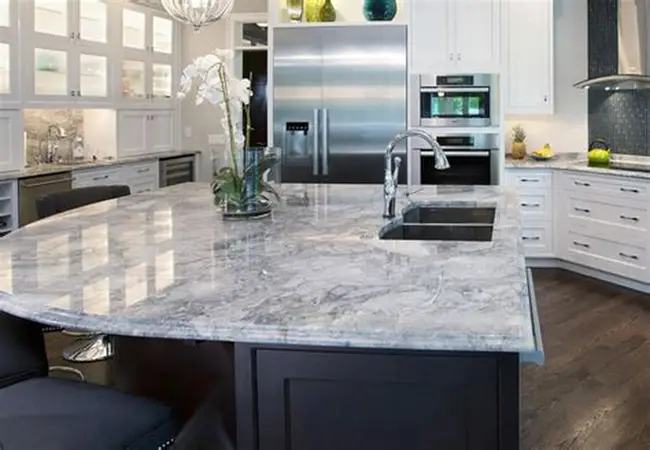
Granite aesthetics: every slab is unique
Granite offers:
- Natural variation in color and pattern—no two slabs are identical.
- Options ranging from quiet, subtle grains to bold, dramatic veining.
Popular choices include:
- White granite countertop styles – great for bright, modern, Scandi, or coastal designs.
- Black granite countertops – striking in contemporary, industrial, or high-contrast kitchens.
Granite also shines in:
- Granite backsplash designs – full-slab backsplashes can look incredibly high-end.
- Thoughtful pairing granite with cabinet colors – warm woods, crisp whites, or modern greys can all work beautifully depending on your stone.
Quartz aesthetics: clean and consistent
- Easier to match across large spaces because patterns are controlled.
- Great for minimalist, ultra-modern, or very color-specific designs.
- Marble-look quartz is popular when you want marble vibes without marble maintenance.
If you love the organic variation of real stone, granite usually wins. If you want strict consistency and precise color control, quartz has the edge.
Granite Countertop Cost, Where to Buy, and Aardwolf Solutions
Once you’ve got a sense of granite vs quartz countertops, the next step is to look at sources, pricing, and product options.
Where to buy granite countertops
Your main options:
- Local fabricators and showrooms – personalized guidance, custom work.
- Wholesale granite suppliers – best for hand-selecting your exact slab.
- Big-box retailers – streamlined packages and some affordable granite countertop options.
Always compare:
- Material cost
- Fabrication (cutting, edges, cutouts)
- Installation and tear-out of old surfaces
Aardwolf granite: premium slabs and professional services
To make the process easier and more predictable, the Aardwolf granite countertop collection offers:
- Curated Aardwolf premium granite slabs with excellent quality and visual appeal.
- A wide range of tones and styles, including many of the best Aardwolf granite colors for current cabinet and flooring trends.
With Aardwolf granite installation services, you get:
- Professional templating, cutting, and seam placement
- Proper structural support for heavy stone
- Correct initial sealing and finishing
The Aardwolf granite pricing guide can help you:
- Understand price tiers (entry, mid-range, premium)
- Balance aesthetics and budget
- Decide when granite may offer equal or better value than a similarly-priced quartz option
So… Is Quartz Cheaper Than Granite?
Putting it all together:
- Quartz is not automatically cheaper than granite.
- In many cases, especially for common colors, granite can be the more economical choice.
- At the high end, some exotic granite slabs can cost more than quartz, and vice versa.
- Long-term value depends on how you use your kitchen, how much you care about sealing, and whether you prefer natural granite stone or a highly consistent engineered quartz surface.