
Even though many people hear “igneous rock” and immediately think of granite, the seafloor tells a very different story.
If you’ve ever done an Earth science quiz, you’ve probably seen this question:
What type of igneous rock makes up most of the ocean floor?
A. Basalt B. Granite C. Lucite D. Shale
The correct answer is basalt.
Even though many people hear “igneous rock” and immediately think of granite, the seafloor tells a very different story. Most of the oceanic crust—the solid rock beneath the oceans—is made of dark, fine-grained basalt, not granite.
In this article, we’ll unpack:
- Why basalt — not granite — dominates the ocean floor
- How granite stone fits into Earth’s crust and into your kitchen
- The difference between oceanic basalt and continental granite
- How this geology connects to granite countertops, design choices, and Aardwolf products
Basalt vs Granite: Two Igneous Heavyweights
Basalt: The main rock of the ocean floor
Basalt is a mafic, extrusive igneous rock that:
- Forms from lava that cools quickly at or near Earth’s surface
- Is dark-colored, dense, and fine-grained
- Is rich in iron and magnesium, with relatively low silica
At mid-ocean ridges, basaltic magma rises from the mantle, erupts as lava, and solidifies into new oceanic crust. Over time, this process has paved most of the seafloor with basalt.
Granite: The superstar of the continents
Granite, by contrast, is a felsic, intrusive igneous rock that:
- Forms when magma cools slowly deep underground
- Has large, visible crystals of quartz, feldspar, and mica
- Is lighter in color and less dense than basalt
These characteristics of granite make it the main building block of much of Earth’s continental crust, not the oceanic crust.
If you want the full story from magma to countertop, these resources are perfect companions:
They explain how granite evolves from deep, slow-cooling magma into the durable granite stone we use in buildings and homes.
Why Basalt, Not Granite, Makes Up Most of the Ocean Floor
The role of mid-ocean ridges and plate tectonics
The ocean floor is created primarily at mid-ocean ridges, where tectonic plates spread apart and mantle material rises to fill the gap. That mantle material partially melts to form basaltic magma, which then:
- Rises along fissures in the ridge
- Erupts as lava onto the seafloor
- Cools quickly to form basalt and related mafic rocks
Layer upon layer of this basalt builds up the oceanic crust, which is:
- Thin (about 5–10 km)
- Dense
- Compositionally mafic (basalt + gabbro)
How granite fits in — but on land
Continental crust is very different:
- Thicker (30–70 km)
- Less dense
- Rich in granite and other felsic rocks
Because granite is lighter, continental crust “floats” higher on the mantle—forming the land we live on.
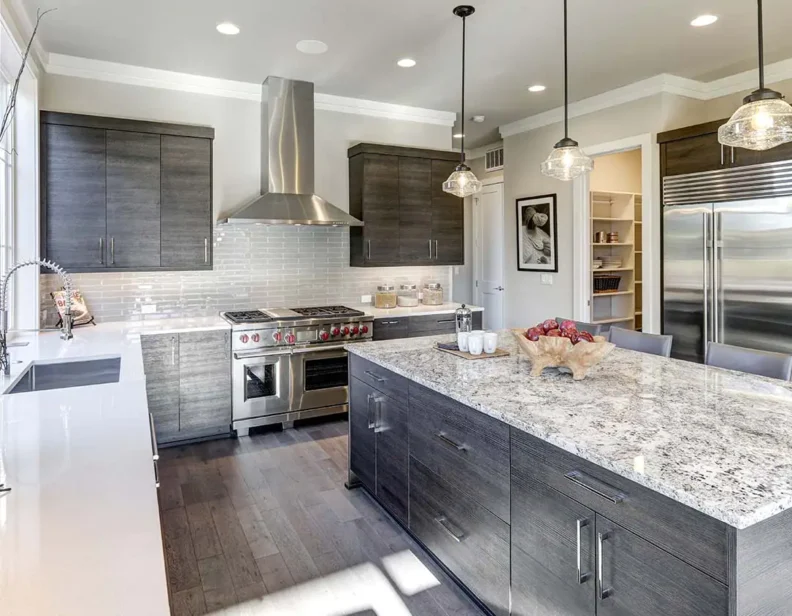
So while basalt rules the seafloor, granite rules the continents—including the slabs we turn into white granite countertops and black granite countertops.
Granite Geology and Composition (And Why It Matters Indoors)
Granite geology and composition
Granite is made of:
- Quartz – gives hardness and a glassy sparkle
- Feldspar – often white, cream, or pink, controlling the base color
- Mica & accessory minerals – provide darker flecks, veins, and shimmer
This granite geology and composition creates:
- Excellent scratch resistance
- Strong heat resistance
- Slight porosity (important for sealing)
- A surface that can be highly polished
For more on granite’s journey and transformations:
- What geologic process can change granite into gneiss?
- How can a large block of granite form layers like an onion?
These explore how granite evolves under heat, pressure, and weathering in nature.
From Oceanic Basalt to Continental Granite Countertops
Basalt under the sea, granite in your kitchen
It’s a neat contrast:
- Basalt shapes the hidden world beneath the oceans.
- Granite shapes many of the surfaces we see and touch every day on land.
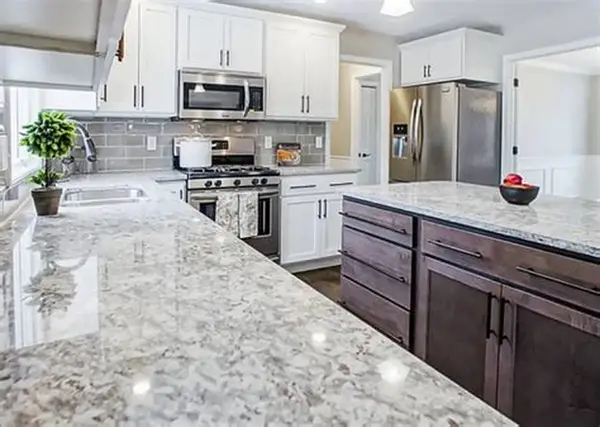
When you admire a polished granite countertop, you’re looking at rock that formed in the continental crust, not on the ocean floor.
Natural vs engineered granite in interior design
In the design world, people often talk about natural vs. engineered granite:
- Natural granite – genuine rock quarried in slabs, each one unique
- Engineered “granite” / quartz – man-made from stone particles and resin
In a granite vs quartz countertops comparison:
- Granite offers natural patterns and higher heat resistance.
- Quartz offers a non-porous surface that doesn’t require sealing.
But both owe their existence to tectonic and magmatic processes that also create basalt on the seafloor.
Granite Stone in the Home: Care, Sealing and Refinishing
Basalt doesn’t need polishing at the bottom of the ocean, but granite stone in your home definitely benefits from proper care.
Clean granite countertops the right way
Day-to-day:
- Use mild, pH-neutral cleaners
- Avoid harsh acids (vinegar, citrus) and strong bleach
- Wipe spills quickly to reduce the risk of removing stains from granite later
Sealing granite for stain resistance
Because granite is slightly porous, sealing granite is essential:
- A penetrating sealer soaks into tiny pores between minerals.
- It helps repel oils, wine, coffee, and colored liquids.
- It makes clean granite countertops easier to maintain.
Repairing chips and polishing granite surfaces
Over time, even strong granite can chip or dull:
- Repairing chips in granite often involves clear or color-matched epoxy on edges and corners.
- Polishing granite surfaces with the right compounds can restore shine if the surface gets hazy or lightly etched.
Proper care ensures your granite remains beautiful far longer than the average piece of oceanic basalt remains exposed before it’s recycled at a subduction zone.
Granite vs Other Materials: A Natural Stone Countertop Comparison
Knowing that basalt dominates the ocean floor and granite dominates the continents is a great gateway into a broader natural stone countertop comparison.
Granite vs marble: pros and cons
- Marble – softer, more porous, and more prone to etching from acids; stunning but high-maintenance.
- Granite – harder and more resistant; better for busy kitchens where spills happen.
Granite vs soapstone durability
- Soapstone – dense and stain-resistant, but scratches easily and often needs oiling to look its best.
- Granite – more scratch-resistant and better at maintaining a polished finish.
Granite better than concrete countertops?
- Concrete – very porous, can crack, and relies entirely on sealers for durability.
- Granite – naturally strong and dense, often better than concrete countertops for long-term residential use.
All of this makes granite one of the most balanced materials when you care about appearance, durability, and maintenance.
Cost, Sourcing and Design: Turning Continental Granite into Countertops
Granite countertop cost and where to buy
Granite countertop cost depends on:
- Stone rarity and color
- Slab thickness and finish
- Edge profiles and number of cut-outs
- Local fabrication and installation rates
You can explore:
- Local showrooms and fabricators
- Wholesale granite suppliers for a bigger selection of full slabs
- Big-box stores with affordable granite countertop options in popular patterns
Color, backsplash and cabinet pairing
Geology gives granite its color range; design makes it shine:
- White granite countertop styles brighten a space and feel modern or coastal.
- Black granite countertops create drama and depth, especially paired with white cabinets.
Thoughtful choices in:
- Granite backsplash designs (tile vs full slab)
- Pairing granite with cabinet colors (contrast vs harmony)
can transform the look of a kitchen or bath without altering the underlying stone.
Aardwolf Granite: Bringing Continental Rock into Modern Spaces
Basalt may own the ocean floor, but Aardwolf helps granite own your interior design.
Aardwolf granite countertop collection
The Aardwolf granite countertop collection focuses on:
- Consistent, high-quality Aardwolf premium granite slabs
- A curated selection of patterns and tones, from subtle to bold
- Many of the best Aardwolf granite colors for today’s cabinet and flooring trends
Aardwolf granite installation services and pricing guide
With Aardwolf granite installation services, you get:
- Professional templating and cutting
- Well-planned seam placement and strong support
- Proper sealing and finishing for long-term performance
The Aardwolf granite pricing guide helps you:
- Compare budget, mid-range, and luxury stones
- Balance cost against durability and visual impact
- Choose materials that make sense for both your lifestyle and your wallet
Final Takeaway: Basalt Below the Waves, Granite Above
So, back to the original question:
What type of igneous rock makes up most of the ocean floor?
Basalt, granite, lucite, shale